


When I first met her in a Turkish supermarket, she was standing at the meat counter, stumbling through broken German, but slipping back into Arabic as she tried to order a simple cut of meat.
Her words were halting, her tone flustered, and I could feel the weight of being a stranger in a foreign land—where even the basic act of buying food is a struggle.
When I greeted her in Arabic, her whole face changed—surprise, joy, recognition—all in an instant. We talked about our children, and for a moment her heaviness lifted.
In a Berlin neighborhood, where silence is the norm, our conversation was loud and animated. At the end, she extended the most natural invitation from her culture: “Come for coffee.”
An Unexpected Invitation
A few days later, I followed the pin on the map that she had sent me and found myself standing in front of a German apartment building. I realized that I didn’t know my new friend’s last name. I looked at the names next to the buzzer, unsure which one to push. Finally, I called her and told her I was at her apartment building—and she sounded confused.
As I stood outside the entrance, an old metal door opened directly off the sidewalk a few feet away, and I saw my friend motion for me to come. As I followed Rana through the doorway, it felt like I was transported out of Germany into the Middle East. I entered a dingy room that was not a house but rather the remains of an old restaurant. A few faded mats sat on the floor, and I lowered myself onto one across from Rana’s little girl, whom I had met in the supermarket just a few days before.
Soon, Rana’s grown son arrived and was very surprised to see me, but a smile crossed his face as I greeted him in Arabic.
A Story of Loss and Resilence
As we chatted, they began to share their story. They described the war, the bombs going off overhead, and Rana recounted the loss of a child. Her son had fled Syria soon after, traveling to Turkey, and then continuing the perilous journey across the sea and up through southern Europe. For months, he had traveled through country after country on foot until he arrived in Germany.
The danger had been enormous. When he finally arrived, he applied for permission for his parents to come. It was many more months before they joined him, but they came alone—they had to leave their two other teenage daughters behind with family in Syria.
Their hardship did not end once they arrived in Germany three and a half years ago. They struggled to find proper housing, living for months in an apartment without running water in the kitchen before moving to this converted restaurant. She shared that the next day, her husband, who had been in another city for the past several days, was coming to get her and the little girl. Still without a residency permit, they were leaving Berlin, hoping to find a place that wasn’t so expensive.
As she shared her story, her voice was surprisingly emotionless—-a numbness likely the result of the significant trauma she had endured.
As we chatted about life in Berlin and her favorite Middle Eastern markets, she repeatedly said, “I wish I had met you sooner.”
As I rose from the mat and said my goodbyes, I did not know if I would ever see my friend again.
Hidden Poverty in a Prosperous Nation
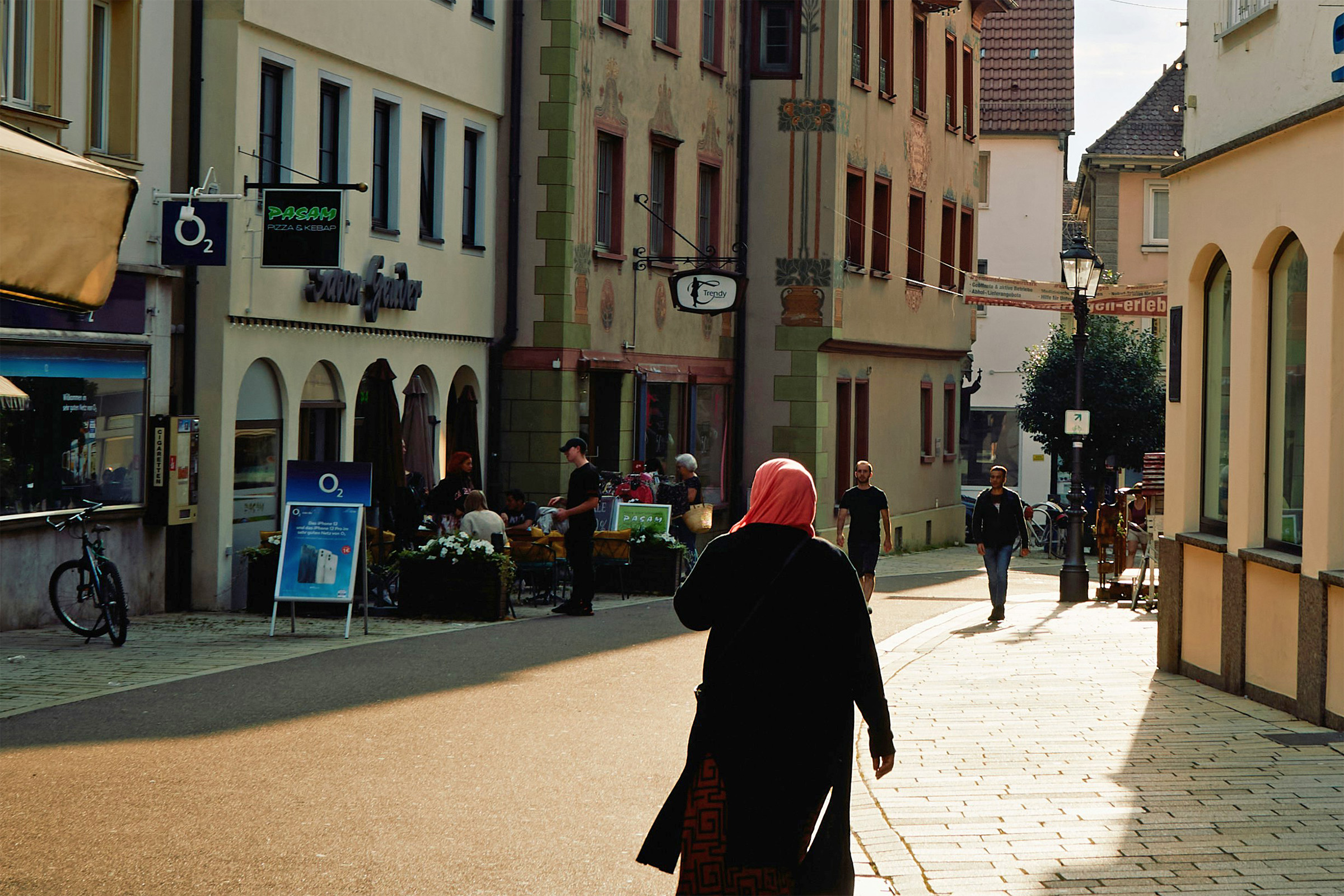
The neighborhood around me was clean and quiet, yet behind their door was the reality of hidden poverty, isolation, and loss. This is the paradox of many Syrian refugees: they are walking the streets of a developed nation, but dwelling in conditions like those of the developing world.
Their lives are often unnoticed or unwanted. They are surrounded by abundance but left in poverty. They are safe but not welcomed, present but not embraced, alive but surviving on the margins.
Ten years ago, Germany opened her doors to refugees—offering safety, stability, and a future to those who could make it to her borders. Within months, hundreds of thousands of refugees flooded into the country, often after perilous, harrowing journeys that brought nightmares for years to come. While we are grateful for all that Germany has done to help, over the past decade, the system has been overwhelmed, and there are so many who have fallen through the cracks.
The physical needs are great, and the spiritual needs are even greater. Separation from family and community have both taken their toll, and the cultural divide brings isolation and misunderstanding to an already sensitive situation.
The Crisis Is Not Finished
Rana’s story is not an exception— it could be repeated a thousand times over across this city. The war in Syria may have slipped from the headlines, but the wounds remain deep. The world has moved on. But Christ has not, and his church cannot. Safety does not equal wholeness. If we believe that the gospel is good news to the poor, then it must be carried into the rooms where families sit on cushions, cut off from their children, drinking coffee through tears.
Bear one another’s burdens, and so fulfill the law of Christ. (Galatians 6:2)
A Call to the Church
Refugees do not need pity—they need presence. They do not need distance—they need disciples. Their doors are open, but will the church walk through them? Our Savior left heaven’s abundance to enter our poverty, so that we might be made rich in his mercy. If we claim to follow him, then our lives must follow the same path—stepping into the margins, sitting on the floor, carrying burdens that are not our own.
- To see them as neighbors, not strangers.
- To open our homes, not just our wallets.
- To join prayers with practical love.
There is a place in this work for young people with time and energy to invest in the lives of others, for older people with wisdom and experience who can be family to the lonely and broken, for people trained in ministry who can expound Scripture and help establish churches, for families who can live life as a shining light in a very dark city. There is a place for you.
God has brought the harvest to our doorstep. It is here. It is now. And the question is whether we will answer the call.
The harvest is plentiful, but the laborers are few; therefore pray earnestly to the Lord of the harvest to send out laborers into his harvest. (Matthew 9:37–38)