


“I was going to be a fetish priest, but God said, ‘No, you’re going to serve me.’”
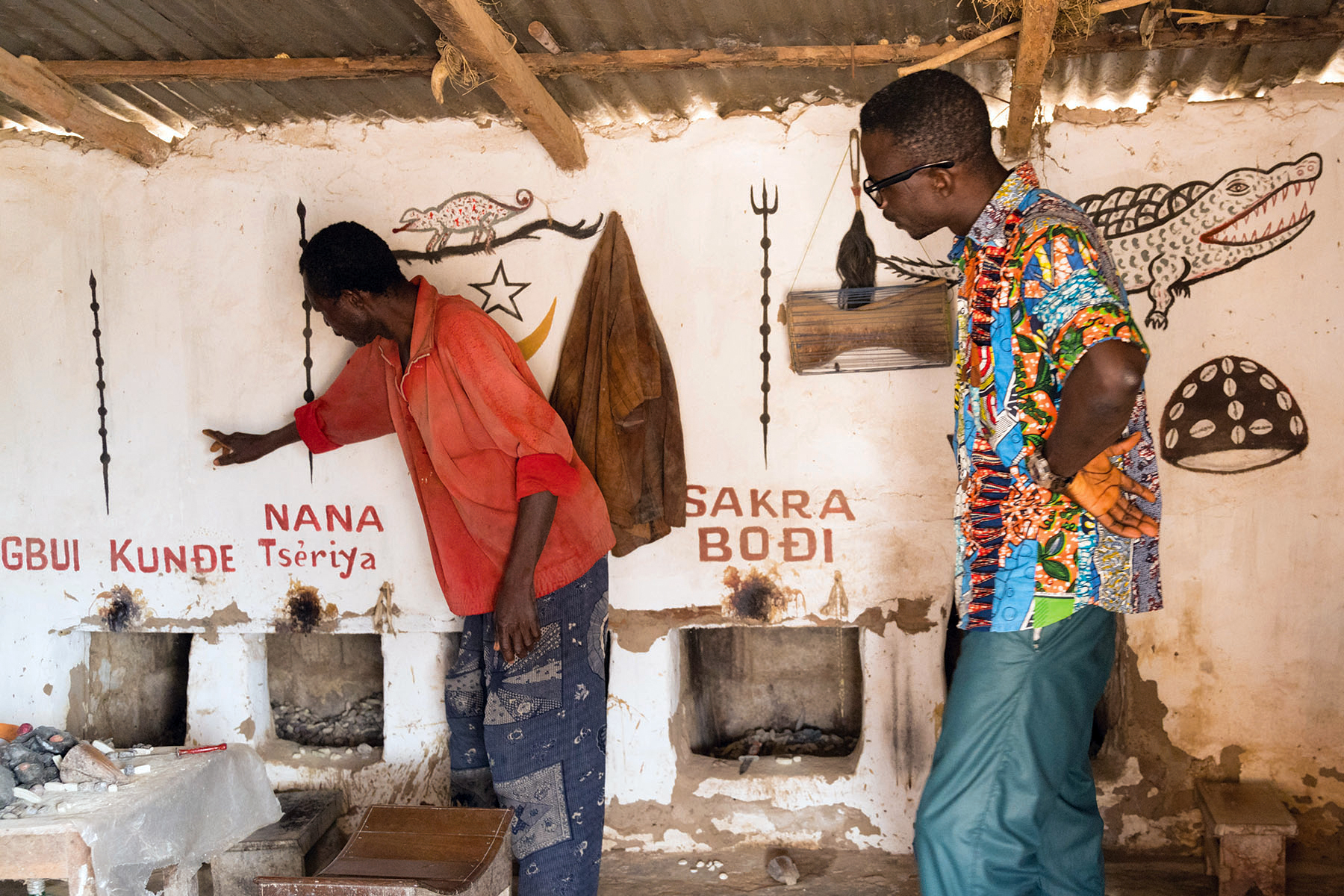
Martouka was born in a house devoted to spirit worship. People from far-flung villages daily arrived to consult his father, a well-known priest, or to seek help, healing, or protection from the fetish in their home—a talisman of wood and bones believed to hold supernatural power. Some nights, his father held ceremonies, beating drums and dancing to invoke the object’s spirit.
When Martouka was around 10 years old, he startled awake one night to a demonic presence. He felt himself being lifted into the air and transported to the room with the fetish. Around him, worshipers stared at a man possessed by a spirit. As drumbeats thundered in the darkness, the demon spoke through the man to Martouka: “Would you like to serve me?”
“That was the only life I knew, so I said, ‘Yes, absolutely,’” he later recalled.
The villagers celebrated his initiation. Martouka became his father’s apprentice. In the mornings before school, he gathered leaves, roots, and bark for medicines and learned voodoo rituals.
“I was respected, even feared, among my brothers in the village and all the people who came to our house,” he said.
Yet although his family was considered powerful, they carefully guarded a secret: they, too, were afraid of the spirits. One day as they worked, Martouka asked his father why bad things happened while they were under the fetish’s protection.
“The fetish travels,” his father replied. “It goes to other villages, and, when it is upset, evil people can come and destroy.” Martouka’s fear grew.
When he attended middle school in town, he saw people going to church. He thought they were wasting their time. One Saturday, he met a Christian who talked about the coming judgment of God. Moved, Martouka wondered, Will the fetish defend me on the day of judgment? He promised to attend church the next day.
During the sermon, Martouka heard for the first time that he was a sinner, and that Jesus died on the cross and rose again. That very day, he believed in Christ as his Lord and Savior.
“All of my fears vanished,” he joyfully exclaimed. “In Christ, I learned that God is everywhere . . . and I knew that I have full protection from God.”
“All of my fears vanished. In Christ, I learned that God is everywhere . . . and I knew that I have full protection from God.”
Martouka
He immediately faced persecution. When he refused to eat meat sacrificed to the fetish, his father became furious. Grabbing a machete, he threatened to chop Martouka into pieces for rejecting the spirits—but Martouka stood firm.
“OK, kill me,” he declared. “I’ll go and be with Jesus.”
Hearing his conviction, his father relented, but the opposition continued.
One month after Martouka’s salvation, his younger brother, Anani, fell deathly ill. The village witch doctor determined he would die. Lying in bed, Anani considered the gospel and wrestled with his fears of abandoning the fetish. Then he, too, submitted his life to Christ. He refused to participate in voodoo ceremonies for his healing, leading to his own rejection from the family. Martouka cared for him as he recovered, even carrying him to school on his back. Later, their elder brother also trusted Christ.
“We stood firm, and Jesus kept blessing us,” Martouka remarked. “We were sharing the good news in our village.”
‘I Must Be a Disciple’
As the boys matured, so did their faith. Before Martouka turned 18, the small group of believers in the village formed a church and, despite his youth, appointed Martouka to teach. He soon recognized that he needed training in addition to his passion for God’s Word. He enrolled in the ABWE-founded Bible institute in Kpalime, graduating in 2002.
After his marriage to Abigail, Martouka was invited by veteran ABWE missionaries Tim and Esther Neufeld to pastor a church plant in the city of Kara, in central Togo—a strategic region where nearly 900,000 people live without access to the gospel. At first, he declined. Then he read Jesus’ words in Luke 14:26–33 instructing his disciples to love him more than family and lands. He felt convicted: I call myself pastor but I cannot even be a disciple because I’m attached to these things and cannot leave? No, I must be a disciple of Christ.
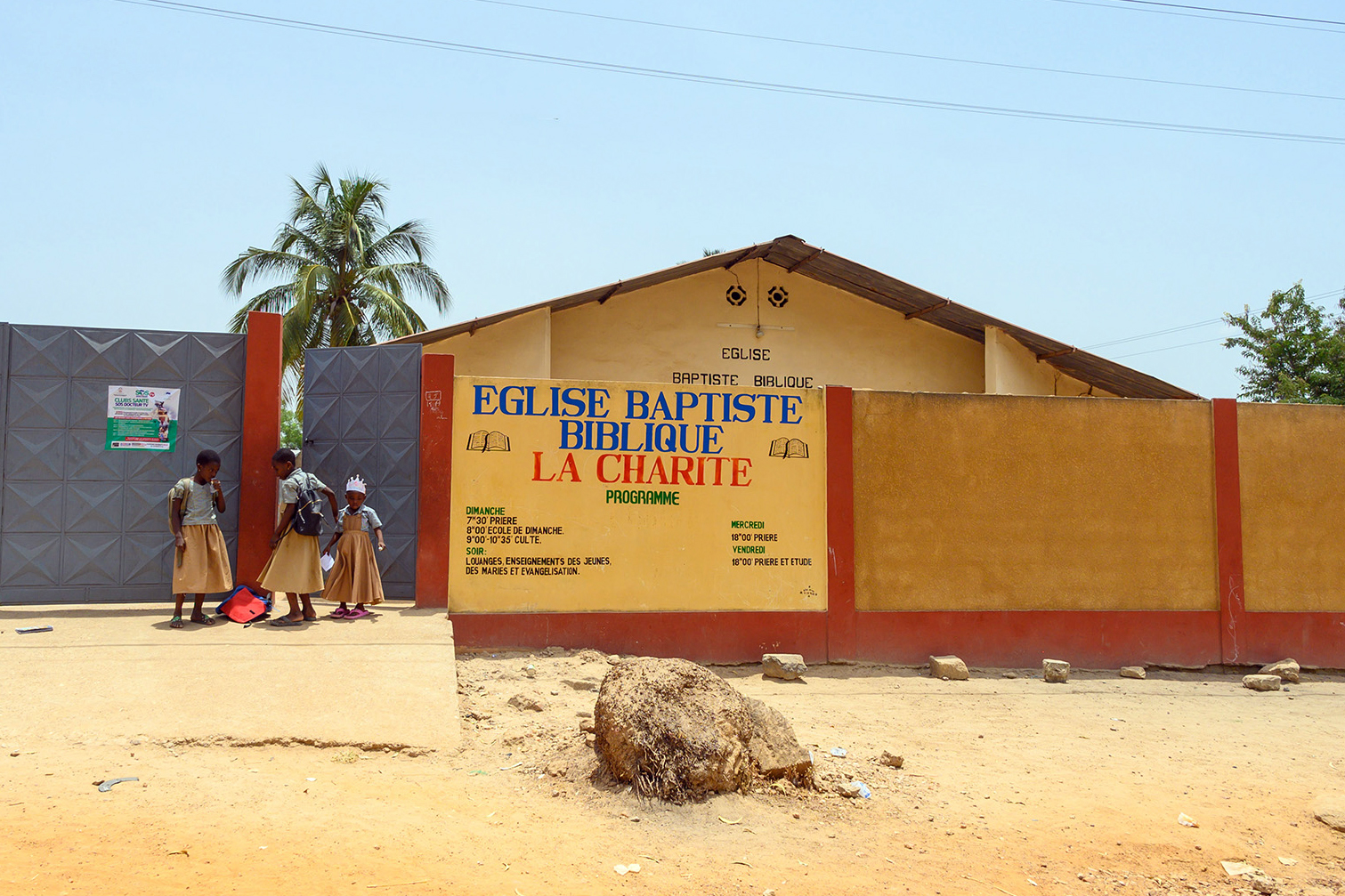
For more than 20 years, Pastor Martouka has led La Charité church in Kara. Through the impact of ABWE missionaries, he completed an M.Div. in the US and returned to serve alongside them in theological education and church planting—not only in Kara but in southern Togo, where his brother, Anani, now pastors a church, and in Zambia.
He and ABWE missionary Jonathan Archer currently lead the ABWE-founded Bible institute in Kara, teaching courses in theology, biblical counseling, and pastoral enrichment.
“God is developing the ministry in Kara as we work together,” Jonathan shared. “Pastor Martouka, along with many other national partners saved out of Togo’s dominant religions, offers crucial insight in training believers to overcome cultural traditions with biblical theology.”
They pray that other Togolese men and women will commit to serving the Lord to reach their nation.
“I want the Word of God to touch people like I was touched,” declared Martouka, “and that they will reject all else to follow Jesus.”