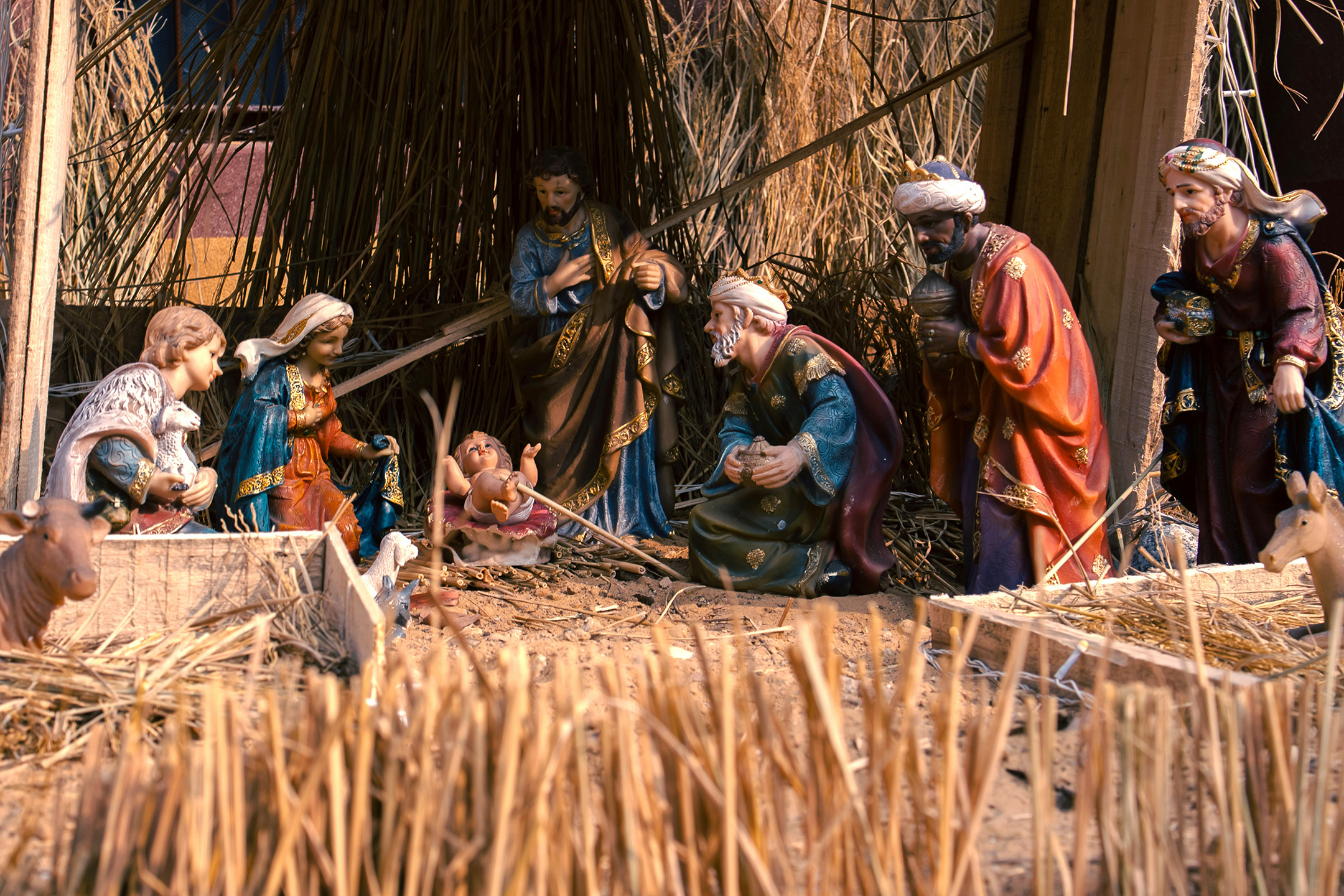



Christmas brings time for our hearts to reflect as we look back on the incredible night of the Messiah’s birth—the night on which the infinite God, in humility, took on finite flesh in order to give us hope.
When we picture Christ’s birth, however, those of us from developed nations often tend to glamorize the biblical events. The pastel illustrations of the nativity from children’s books or the cute Christmas plays at church that feature shepherds adorned in bathrobes may shape our mental images of Christ’s arrival. We imagine a quaint setting: a small stable with fresh hay, two or three animals resting quietly, a neatly padded manger. A window offers a glimpse into a peaceful, star-studded night sky. We envision a softly glowing light hovering over Mary and Joseph as they welcomed the Christ-child into the world.
Was this really the setting of Christ’s birth? Scripture indicates that his birth was not glamorous nor befitting of most Christmas card depictions. It was humble because he was humble. It was lowly because he lowered himself. The location and surroundings of the birth of Christ reveal his deep humility.
A Humble Birth
And she gave birth to her firstborn son and wrapped him in swaddling cloths and laid him in a manger, because there was no place for them in the inn. (Luke 2:7 ESV)
It is hard to truly grasp the magnitude of Christ’s humility unless we understand the place of his humble birth. Living as missionaries in a developing country gives us a glimpse into what the birth of Christ might have actually been like—in a town with dirt roads, crowded streets, meandering animals, and a lack of running water or the medical necessities of childbirth. In our local context in Togo, many people live in houses constructed with mud walls or huts built from woven palm branches. Although the materials would have been different in arid Israel than in tropical West Africa, the approximate standard of living and the routines of daily life would have been similar. Jesus was born in an animal shelter that many Westerners would not consider fit for occupancy, much less for the birth of the Messiah. Yet it was into this very setting that the King of the universe, the Creator, God himself, chose to lower himself and be born as a baby in order to give us new birth. Because of his great love for us and his obedience to the Father, he left his glorious home in heaven to be born in a stable. Christ’s birth was the ultimate expression of humility.
And the Word became flesh and dwelt among us, and we have seen his glory, glory as of the only Son from the Father, full of grace and truth. (John 1:14)
Instead of being welcomed with grandeur and fanfare, or with the sounds of trumpets announcing a mighty king’s arrival, Jesus humbly entered the world to the groans and cries of Mary and the soothing voice of Joseph. Even the announcement by the angels showed his humility as they proclaimed his arrival to lowly shepherds: “For unto you is born this day . . . a Savior, who is Christ the Lord” (Luke 2:11). He was not heralded as a king but rather as a Savior—the promised one who had come to provide for our reconciliation with God. As Simeon later proclaimed in the temple, this humble babe would be our salvation.
Christ, the infinite, omnipotent God, lowered himself to become a helpless baby born in a humble stable in order to one day become the sin-bearer for all mankind (Isaiah 53:11).
His life and death also displayed this humility. As he cared for the sick, showed compassion for the needy, and preached the good news of forgiveness of sins, he had no home of his own (Matthew 8:20), and his appearance was that of a common man. As Isaiah prophesied, “he had no form or majesty that we should look at him, and no beauty that we should desire him” (Isaiah 53:2b). When he gave his life for our salvation, he died with criminals on a cruel cross and was buried among sinful men. He could have offered salvation some other way. Yet, from a stable for his birth to a borrowed tomb for his burial, his life exemplified humility.
Christ emptied himself to obey his Father. His obedience in sacrifice is an example for us on how we too should live our lives in obedience to the Father and in sacrificial service to others. As Christ demonstrated humility through his birth, life, and death, may our lives of humble service, whether at home or abroad, reflect his heart.
[W]ho, though he was in the form of God, did not count equality with God a thing to be grasped, but emptied himself, by taking the form of a servant, being born in the likeness of men. And being found in human form, he humbled himself by becoming obedient to the point of death, even death on a cross. (Philippians 2:6–8, emphasis added)
From Humility to Hope
Even while Christ’s birth serves as an example of his humility, let us not forget that it also gives us great hope! Through him, we have hope for forgiveness and salvation, hope for restoration, hope for each trial, hope for each day and season, and hope for eternity.
After centuries of awaiting the promised Messiah, God’s people found their hope fulfilled as he kept his promise through Christ’s birth.
But you, O Bethlehem Ephrathah,
who are too little to be among the clans of Judah,
from you shall come forth for me
one who is to be ruler in Israel,
whose coming forth is from of old,
from ancient days. (Micah 5:2)
Like the Israelites of old, we too can rest in the confident assurance that God will fulfill all that he has promised.
For all the promises of God find their Yes in him. That is why it is through him that we utter our Amen to God for his glory. (2 Corinthians 1:20, emphasis added)
As we celebrate Advent and focus our hearts on the birth of Christ, let us remember his humility as he lowered himself and came to us in order that we might have the hope of eternity. Let us bow our hearts in Christ-like humility, and let us lift our eyes in the full assurance of hope, knowing that Immanuel indeed is with us.
Editor’s Note: This is the second article in our 2025 Advent devotional series, “Hope of the Nations.” Join us each week as we explore Christ’s birth through the lens of frontline global ministry.