


1. The philosophical and religious tradition of Daoism is best understood alongside Confucianism and Buddhism.
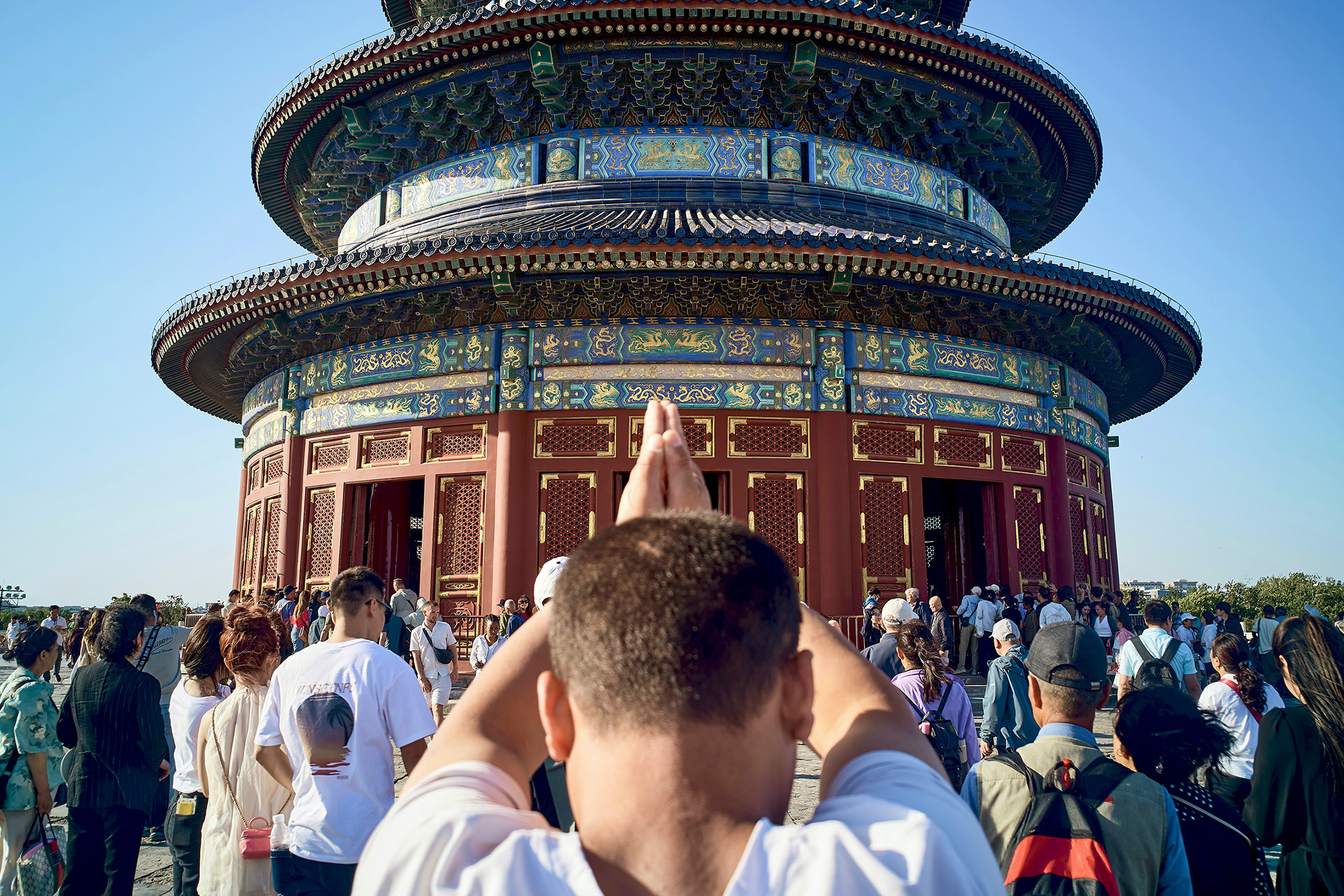
When we think of Daoism, we should think of China. But most of us can’t envision religious life in China without picturing features of Buddhism and Confucianism as well. Confucianism originated in China alongside Daoism during the sixth century BC, while Buddhism didn’t make its way there until a few hundred years after Christ. Today, temples across the People’s Republic blend elements of Daoism, Buddhism, and Confucianism into one amalgamated religious experience.
As believers seeking to share the gospel with those adhering to Chinese religious traditions, we have a beautiful opportunity to emphasize that our faith in Christ is unique. Though our faith is at its richest when understood in light of what God has revealed in the Jewish Scriptures, the Christian life is not lived by dabbling in other faiths but by following Christ as the only way, truth, and life.
2. Daoist teachings trace back to the Chinese philosopher Laozi.
Laozi lived and taught in China during the sixth century BC, around the same time as Confucius. Buddhism’s founder, Siddartha Gautama of northern India, also lived during the sixth century BC, but his teachings didn’t reach China until later. While Confucius taught on politics and social order, Laozi was more concerned with philosophical matters and the nature of the universe itself. Laozi’s Daoism, then, can be seen as China’s earliest indigenous religion.
While Jesus lived on earth during the first century AD, after the time of Laozi and Confucius, we must emphasize to our Daoist friends that God’s plan to save sinners through Christ has been in place since the beginning of time and was promised through Old Testament writings that predate the sixth century by hundreds of years.
3. The term “Daoism” comes from the religion’s central concept: dao, or “the way.”
The name of Laozi’s thought system has historically been transliterated as “Taoism.” However, the more contemporary spelling, “Daoism,” better aligns with China’s official system for Romanizing Mandarin words. The term “dao”simply means “way,” and the primary scripture of Daoism is the Daodejing—the book of the way and its virtue. There are now thousands of other texts in the Daoist canon, but the Daodejing is the most authoritative.
In talking with a loved one who might be interested in Daoist thought, consider reminding him or her that in the early days following Jesus’ ministry, the Christian movement was simply called “the way.”
4. Daoists envision the dao as the perfect balance of yin and yang.
The dao is understood as life’s proper “way,” the way in which yin and yang are perfectly balanced. Yin entails all that is feminine, passive, cool, and dark. Yang encompasses those elements of the world that are masculine, active, warm, and bright. When yin and yang are in balance, the universe is said to be operating in accordance with the dao. Confucianism also employs a system of duality: ren and li, goodness and propriety. The goal in both systems is to maintain an ideal state of harmony, whether in society itself, as was emphasized by Confucius, or in the entire universe, as Laozi envisioned it.
The notion of the dao being a perfect state of balance, harmony, and order reminds one of the biblical concept of shalom. Often rendered as “wholeness” or “peace,” shalom might be an attractive ideal for people endeared to Daoist sensibilities.
5. According to Laozi, yin and yang can only be balanced through wuwei—nonaction.
Daoism holds that the way to balance yin and yang and preserve the dao is by doing nothing to interfere with it. The idea here is that the universe has its best shot at balancing out when it is left to its own devices. Humans should therefore accept and act according to the established natural order of the universe rather than seeking to control or strive against it. Centuries after Laozi in China, this idealization of nonaction, or wuwei, would find similarities in Buddhist cautions against striving. However, from the very start, the Daoist emphasis on passivity clashed diametrically with Confucius’ teachings on proactivity and duty.
While Daoists welcome the dao by letting the universe maintain its established path, and Confucians seek social order through goodness and proper action, we as Christians rest in the assurance that our loving God will restore shalom through his Son, Jesus Christ.
6. The Daoist’s ultimate goal in life is to become an “uncarved block.”
Since the dao is actualized when yin and yang are balanced, and since the way to balance yin and yang is by doing nothing (i.e., wuwei), people are at their best when they are stagnant. In Daoist terms, this ideal state of stagnation is imaged by an “uncarved block,” or pu. When existing like an uncarved block, a person does not develop, grow, or actualize any of his or her potential. Put simply, to maintain wuwei and stay in the dao, each of us mustbecome a pu.
How starkly this Daoist ideal of the uncarved block contrasts with the Christian notion of sanctification! People influenced by Daoism can be encouraged that there is a God who desires to make them into all that he has called them to be.
7. Though a later development, the worship of deities is a big part of Daoist practice today.
In the Daodejing text, Laozi did not lay out a pantheon of deities. Likewise, Confucius seems to have been unconcerned with the question of gods. When Buddhism came to China during the first few centuries AD, however, it brought a long list of semi-divinities called bodhisattvas. It was likely in reaction to Buddhism’s advent in China that Daoism developed its theology—or better, its poly-theology. Hundreds of gods would be added to the Daoist pantheon over time, and before long, the mythological Jade Emperor, or Yuhuang Shangdi, had secured his seat at the top.
Whereas Daoism began with virtually no gods and ended up with hundreds, the Christian faith has compelled us to put our trust in the one true God all along.
8. Today, Daoist priests conduct rituals and ceremonies in temples across China.
In contemporary Chinese culture, Daoism is nothing if not pragmatic. Alongside Buddhist monks and Confucian ritual masters, priests of the Laozi tradition can be seen performing temple rites for healing, exorcism, or any number of other practical purposes. Carried out largely through chanting, these rituals can also involve music and dance. Chinese temple-goers tend to view Daoist priests as intermediaries between themselves and the gods.
What an opportunity we have to share with our Daoist friends that, when we have the Holy Spirit, none of these rituals are necessary. The Christian pastor is not a magician who placates the gods for us but rather a shepherd to help us walk in Christ’s way.
9. In Daoism, obedience to parents is a high virtue.
Obedience to parents, or filial piety, is a cornerstone of Chinese culture. This virtue was exalted most clearly by Confucius, who insisted that respect for authorities—including one’s parents—was crucial for any society to function well. Laozi’s teaching also made space for filial piety since, in the dao, family harmony would manifest naturally of its own accord. Confucius taught that children must obey their parents for the sake of society, while Laozi said that a child would naturally end up obedient when encouraged to live as an uncarved block.
Contrary to both these notions are two biblical truths: that only the Holy Spirit can enable us to live in obedience, and that it is God’s glory that ultimately motivates us to obey in the first place.
10. Christians can draw many points of gospel connection between Daoist thought and biblical theology.
Some features of Daoism contrast starkly with Christian doctrine, while others provide points of connection between Laozi’s thought and the unique truths of the Bible. In all these cases, we have opportunities to craft meaningful gospel conversations with our Daoist friends to introduce the truth of Scripture. To follow Jesus is to walk in “the way,” and what he wants for us is nothing short of shalom—that perfect harmony with God which can only be brought about by God. If you know someone who is inclined toward Chinese thought and culture, chances are that they have been influenced by Daoism. Reach out to them with the gospel today.