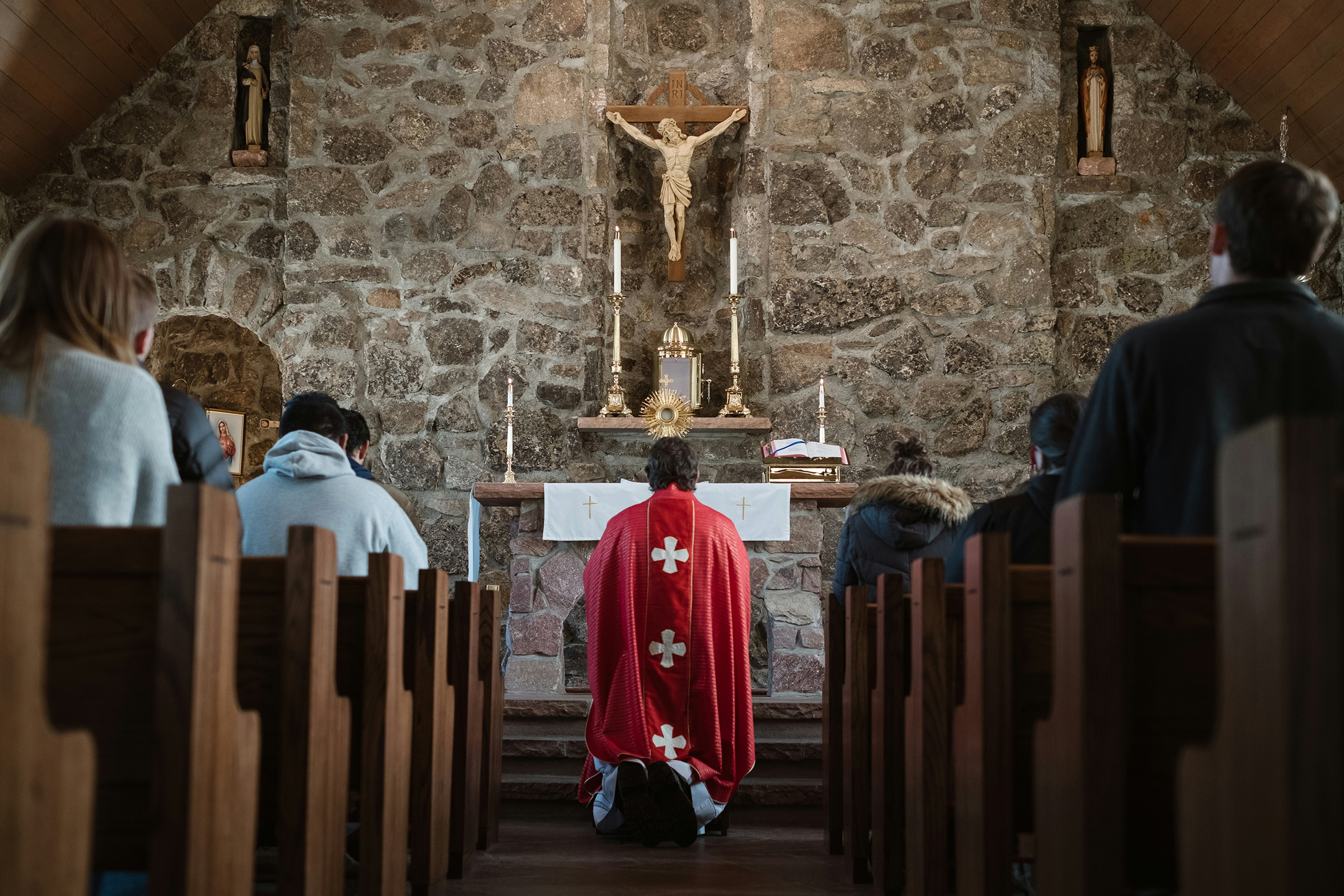



In recent years, many in pastoral ministry and theological education have noticed a subtle but steady shift.
Increasingly, young believers are becoming attracted to Roman Catholicism and Eastern Orthodoxy. Some are engaging from a distance while others are quietly leaving evangelical churches altogether.
While our initial reaction may be to attribute this to aesthetic preference, it reveals a growing desire for stability and meaning. And if we examine this drift closely, we must acknowledge that it doesn’t happen in a vacuum.
A Familiar Longing, Newly Expressed
Every generation seeks what is solid and enduring. As a former Catholic, long before I fully understood the gospel, I wrestled with the tension between performance and grace, between outward religiosity and a sincere relationship with God. That struggle is real and has deep implications in our spiritual walk.
What is different today is how that struggle is expressed. Young believers are not just drawn to liturgy or tradition for their own sake. Often, they’re quietly (or not so quietly) reacting to what they see as superficiality in evangelical culture. When depth is missing, they will look for it elsewhere, and traditions like Catholicism and Orthodoxy present themselves as ancient and sacred options.
Why the Attraction?
Several factors help explain this growing interest:
1. A Desire for Historical Continuity
Young people want to understand the origins of their faith and see how it connects to the early church. When these questions go unanswered, evangelicalism can seem shallow compared to the continuity of Catholic and Orthodox traditions.
2. A Longing for Reverence and Mystery
In a world of constant stimulation, many are seeking out spaces that feel separate. Liturgical traditions offer a sense of transcendence that sharply contrasts with everyday life.
3. A Reaction Against Emotionalism
For some, faith has been shaped mainly through personal, emotional experience. When that is the case, spiritual stability is, at best, weakened, leaving a void that more liturgical traditions can seemingly fill.
4. A Search for Identity in a Fragmented Culture
We live in a time marked by instability and disconnection. Traditions built over centuries of Catholic and Orthodox worship offer a compelling shared identity and a sense of belonging.
5. A Lack of Deep Discipleship
Perhaps most importantly, many of these believers have been involved in church life without ever being discipled or forming deep theological roots. When that depth is missing, people tend to look for it somewhere else. And without a strong biblical foundation, they are often unable to discern truth from error.
The Deeper Issue
It’s tempting to see this as an external problem—that young people are simply being pulled away. But the more important question is closer to home: What theological foundation have they received from our evangelical churches?
If their faith has been mainly formed by emotional moments or cultural expression, then it isn’t surprising that they are shifting toward more historical traditions. This shift may, in fact, be less of a liturgical matter and more of a discipleship matter.
A Call to Discipleship
True discipleship isn’t a program to finish; it’s a way of life. It’s the sharing of truth with real-life application and helping someone come to a clear understanding of what we believe and why. When discipleship is limited to occasional meetings or curriculum-based interactions, it loses its transformative power and becomes a mere transmission of knowledge.
Young believers need spiritual formation. They need to be grounded in areas like:
- The authority of Scripture
- Salvation by grace through faith
- The person and work of Christ
- The mission and purpose of the church
- The development of doctrine throughout church history
- The proper role of tradition
Without these anchors, even genuine faith can remain fragile.
Recovering Our Theological Vision
In many cases, evangelicalism has focused on accessibility over depth, and in our effort to stay relevant and attractive, we may sometimes become superficial. We must remember that the church is called to be faithful to God and his Word; it is not intended to exist as a comfortable place for cultural expressions that run contrary to Scripture.
We need to restore the church as a theological community: a place where truth is communicated clearly and with depth. We must resist the urge to oversimplify the richness of the gospel. Therefore, our preaching must both stir the heart and instruct the mind. Our teaching must shape lives instead of just informing them. Our ministries must not only gather people but ground them in God’s Word.
The Role of Feelings and Culture
We also need to consider how culture and emotion profoundly influence how people view truth. In the worldviews surrounding us, personal experience is often regarded as the ultimate authority. But Scripture presents a different foundation.
Feelings matter, but they aren’t reliable guides. Culture influences us, but it doesn’t determine what is true. Faith must be based on the unchanging Word of God. When this isn’t clearly taught, people look for stability elsewhere.
Practical Steps for Pastors and Leaders
How, then, should we respond to these young believers seeking options beyond evangelical Christianity?
1. Teach doctrine clearly and consistently.
Do not assume understanding. Frequently revisit foundational truths and show their relevance to daily life.
2. Build pathways for meaningful discipleship.
Move beyond surface-level engagement. Create environments where questions are welcomed and truth is patiently explored in community.
3. Engage with church history thoughtfully.
Help believers see that evangelical faith is part of the church’s larger story. Affirm continuity where it exists, while also clarifying where tradition diverges from Scripture.
4. Cultivate reverent worship.
Revering God is not limited to a specific style. Worship can be both joyful and solemn, both personal and fully centered on God.
5. Address tough questions honestly.
Young believers are asking hard questions about the Christian faith and practice, and we cannot afford to give them the quick answer. Instead, we must give them an honest answer that tells them the truth, even when those truths reveal the inconsistencies in some of our own positions. Anything different will feed further distrust and increase their desire to look for answers elsewhere.
6. Model spiritual maturity.
More than anything, these young people need to see what a life anchored in Christ looks like. They need daily examples of steady, humble lives shaped by grace.
An Invitation
This is a challenging moment in the evangelical church, but it is also an invitation to examine our ministries, seek true discipleship, and renew our commitment to theological depth. Our goal isn’t to compete with other traditions but to remain faithful, clearly teaching biblical truth and living it consistently so we can pass it on to the next generation with conviction.

Editor’s Note: This article was originally published by ABWE EveryEthne on April 28, 2026.