


“Hope” is a word with many facets.
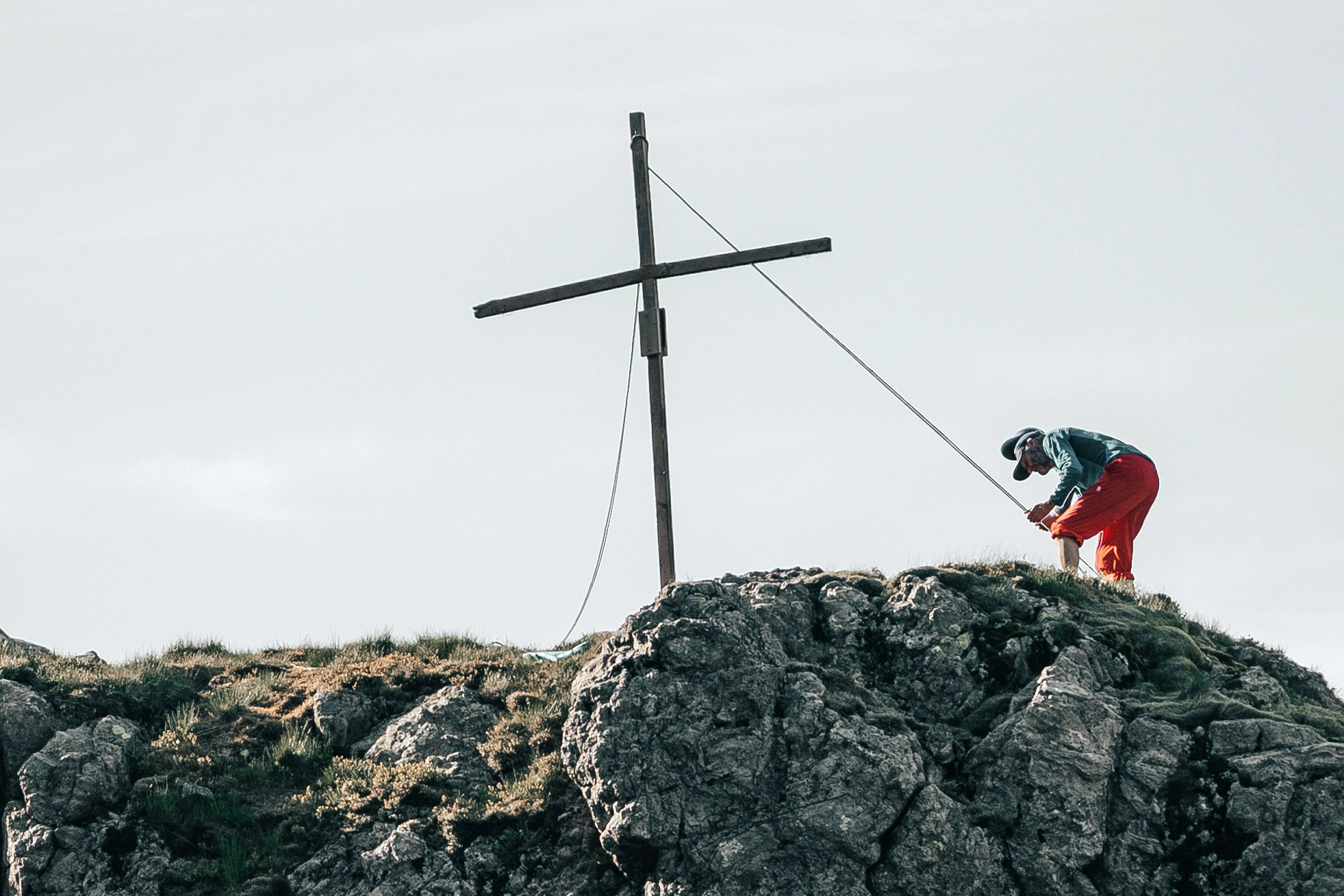
It can refer to the desire for a joyful event, the anticipation of a good outcome, or simply waiting with expectation. In Hebrew, a rich word for hope is qavah. Qavah means “to wait for” or “to wait for with anticipation or hope” and is related to the Hebrew word for cord. When you tighten a cord, you create tension until there is a release. Qavah captures the feeling of tension and expectation as you wait for something to happen.
Hope is, in many ways, a form of faith. Sometimes we feel our faith being stretched like a taut rope, but we believe that, in this tension, God is at work.
Hope is, in many ways, a form of faith. Sometimes we feel our faith being stretched like a taut rope, but we believe that, in this tension, God is at work.
Interestingly, the Old Testament includes many moments when literal cords were in the hands of people whose hearts were full of hope. Abraham used cords to tie up his son, Isaac. He was prepared to sacrifice Isaac on the altar and then wait in hope for God to raise him from the dead. As Abraham tightened the cords around his son, his faith was stretched: “By faith Abraham . . . was in the act of offering up his only son, of whom it was said, ‘Through Isaac shall your offspring be named.’ He considered that God was able even to raise him from the dead, from which, figuratively speaking, he did receive him back” (Hebrews 11:17-19).
Rahab used a red cord to mark her home to be spared from the divine destruction facing Jericho. After saving the lives of the Israelite spies, she hoped that they would keep their promise to let her live. As Rahab let the red cord fall from her window, her faith was stretched, but her heart was full of hope. “By faith Rahab the prostitute did not perish with those who were disobedient because she had given a friendly welcome to the spies” (Hebrews 11:31).
Jeremiah was lowered into a cistern by a rope. He faithfully proclaimed God’s message to the Israelites, and his reward was being thrown into a muddy cistern because the people did not want to hear the truth. Yet Jeremiah remained confident that God had a plan for his sinful people: “‘I know the plans I have for you,’ declares the Lord, ‘plans to prosper you and not to harm you, plans to give you hope and a future’” (Jeremiah 29:11).
Shadrach, Meshach, and Abednego were bound with ropes and thrown into a fiery furnace after they refused to worship anyone besides the one true God. They hoped God would save them from the flames, but even if he didn’t, they were willing to sacrifice their lives. They kept their hope in God even as their faith was stretched—and God miraculously fulfilled their hope. “Nebuchadnezzar answered and said, ‘Blessed be the God of Shadrach, Meshach, and Abednego, who has sent his angel and delivered his servants, who trusted in him . . . and yielded up their bodies rather than serve and worship any god except their own God’” (Daniel 3:28).
After these amazing Old Testament stories of our heroes of the faith, a time of silence began. For 400 years, no prophets spoke. No words of the Lord were recorded. But one night hope was rekindled. The silence was shattered by a baby’s first cry. Angelic voices filled the night sky. And a baby’s name was declared: Jesus.
Hope was alive.
Jesus brought hope to whomever he met. The blind received sight. The lame walked. The demon-possessed were healed. The faithless became faithful. Jesus brought hope for the whole world.
But despite the hope he brought, he was bound with ropes and led away to be crucified. In the garden, he had begged God to find another way to save humanity, but he was willing to sacrifice his life to save people from every nation.
As Jesus hung on the cross, the weight of our sin upon him, his heart was full of hope. He knew that death would not be the end of his story. After three days, he rose again, conquering sin and death.
Our hope is alive. As Peter proclaims, “Blessed be the God and Father of our Lord Jesus Christ! According to his great mercy, he has caused us to be born again to a living hope through the resurrection of Jesus Christ from the dead” (1 Peter 1:3). Jesus gives us true, living hope. Even when our faith is being stretched like a taut rope pulled to the breaking point, we do not lose hope. We know that God is working in all things to make us more like him. Even during times of hurt and pain there is hope: “We rejoice in our sufferings, knowing that suffering produces endurance, and endurance produces character, and character produces hope, and hope does not put us to shame, because God’s love has been poured into our hearts through the Holy Spirit who has been given to us (Romans 5:3-5).”
Through Jesus, we have hope for this life. We don’t walk alone, and we can rest in the assurance that God is working all things together for good to produce in us endurance, character, and hope.
Through Jesus, we also have hope for eternity. We know that this earth is not our home, and someday we will dwell in a place with no more death, pain, or fear. Through Jesus, we know this truth: our hope is alive!