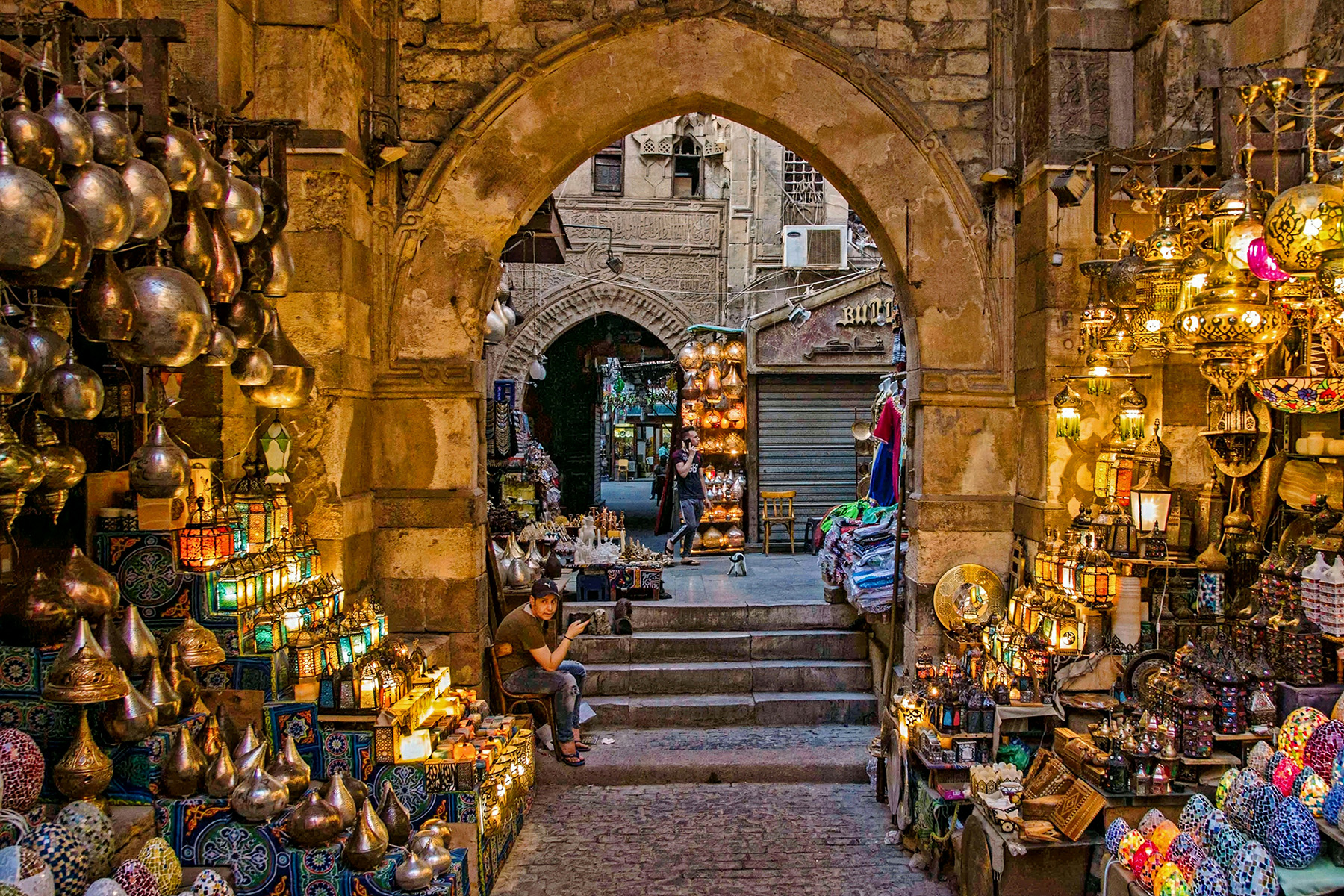



In the Middle East, where Christ was born, Christmas morning dawns like any other.
Sunlight pierces through clouds laden with the promise of rain, the long-awaited showers reviving the arid landscape turned dusty and barren after the long dry season. Families pull on coats, and women pull their scarves tighter as they hurry through the chilling wind on their way to work, school, or daily errands, largely oblivious to the significance of the day.
More than 2,000 years after Christ’s birth, relatively little trace remains of him in the land to which he came. Much like his contemporaries in the Ancient Near East, the majority people groups of the modern Middle East have rejected Jesus as the longed-for Messiah and Son of God and consider him to be simply a prophet or teacher, leaving an entire world region as spiritually dry as its early-winter landscape.
I felt this disparity acutely on my first Christmas Day in the Middle East. I sat in class with other newcomers to the nation, listening to our professor briefly explain how to say “Merry Christmas” in the local language before diving into the mundane of lessons, tests, and homework. From the bus window on the way home, I strained for a glimpse of any familiar sights of Christmas. Only a couple isolated trees and scattered strings of lights marked the holiday, decorating the homes and businesses of a small minority of Catholic, Coptic, or Eastern Orthodox families. The few evangelicals in our city remembered Christ’s birth quietly in church services or small groups without Western traditions. Alone in the stillness of my apartment, oceans away from family and friends, my joy at Christ’s birth clashed with the grief and loneliness of celebrating in a culture where his message is not yet known.
This tension is not uncommon. Many believers find themselves longing for familiar community during Christmas. Missionaries in unreached areas like the Middle East may have few others with whom to celebrate. Global workers in nearly all locations sacrifice living close to loved ones and feel that distance most intensely during holidays. For singles, the feeling can be even more pronounced. Many people watch the date of Christmas draw nearer on the calendar but find themselves unable to shake the sensation that, as C.S. Lewis described of Narnia, it’s “always winter, but never Christmas.”
The First Celebrations of Christmas
The Christmas story itself gives us hope for community and connection. The Gospels of Matthew and Luke remind us that the first Christmas was celebrated communally: God the Father divinely announced the birth of his incarnate Son, offering an opportunity for those who heard to gather before the child in worship, recognition, and praise.
Luke describes the setting of Christ’s birth:
And she gave birth to her firstborn son and wrapped him in swaddling cloths and laid him in a manger, because there was no place for them in the inn. (Luke 2:7 ESV)
The details surrounding his first breaths remain veiled. Were Mary and Joseph left alone and rejected in Bethlehem, as tradition holds? Or were they staying in a family home already so crowded with people that Mary gave birth in the lower portion of the house with the animals rather than in the guest room, as some theologians propose? The hospitable culture of first-century Israel, along with a more accurate translation of the Greek kataluma as “guest room” rather than “inn,” suggest the latter. But whether the first Christmas began with loneliness or surrounded by helpful relatives, the next recorded action was an invitation.
And in the same region there were shepherds out in the field, keeping watch over their flock by night. And an angel of the Lord appeared to them . . . And the angel said to them, “Fear not, for behold, I bring you good news of great joy that will be for all the people. For unto you is born this day in the city of David a Savior, who is Christ the Lord. And this will be a sign for you: you will find a baby wrapped in swaddling cloths and lying in a manger.” (Luke 2:8–12)
God himself dispatched his angelic emissaries to invite the shepherds to celebrate the newborn Savior—and they responded. Together, they left “with haste” (v. 16) to see what the angel had announced. These lower-class shepherds became the first to gather around the Son of God and celebrate his birth in a joyful assembly, praising and glorifying God.
Likewise, a divinely positioned star summoned a different group of worshipers. Wise men from the east—men devoted to interpreting the skies—saw the heavenly sign and set off on a journey to worship the child born as King of the Jews. God used the star to sovereignly direct them to the location where Jesus and his earthly parents were living so they too could gather in praise.
And behold, the star that they had seen when it rose went before them until it came to rest over the place where the child was. When they saw the star, they rejoiced exceedingly with great joy. And going into the house, they saw the child with Mary his mother, and they fell down and worshiped him. (Matthew 2:9b–11a)
From nearby fields to distant lands, God drew people together that first Christmas to worship his Son. Yet even greater than these human connections was his own presence with them. The newborn Jesus was Immanuel, “God with us” (Matthew 1:23). He was the Word made flesh who dwelt among us (John 1:14), the fullness of God in human form (Colossians 2:9). He experienced the day-to-day joys and struggles of our life here on earth before dying and resurrecting from the grave to give us the hope of eternal life with him. His last words before ascending to heaven were a promise to be with us always, even to the end of the age (Matthew 28:20).
From nearby fields to distant lands, God drew people together that first Christmas to worship his Son. Yet even greater than these human connections was his own presence with them.
Our Invitation
If Christmas finds us far from home or longing for loved ones, the communal celebrations of Christ’s birth can bring us hope. Just as he beckoned unlikely groups of shepherds and wise men to gather around Jesus, Mary, and Joseph, God sovereignly places us in community. He is adding to his body—the church—among the nations. Let us consider: Who has he placed around us with whom we can worship and celebrate? How can we encourage other believers—whether near or far—in our praise and service to God? If our hope falters, we can rest in the comfort that he is with us.
And, as we worship our Savior, may our joy compel us to follow the example of the shepherds and extend this invitation to others who do not yet know him:
And when they saw it, they made known the saying that had been told them concerning this child. And all who heard it wondered at what the shepherds told them. (Luke 2:17–18)
While my first holidays in the Middle East brought silence and longing, they also became highlights of ministry. Overcoming the stillness of the day, close teammates and I gathered to prepare a celebration. Around a kitchen table abundant with food from several nations, we joined with friends, colleagues, and acquaintances—believers and unbelievers alike—to remember the one who had come to save us. We shared his message and rejoiced as his community.
And Christ himself, Immanuel, was present with us—to the end of the age.
Editor’s Note: This is the fourth article in our 2025 Advent devotional series, “Hope of the Nations.” Join us each week as we explore Christ’s birth through the lens of frontline global ministry.