

In the 20th century, the remnants of European Christendom fractured.
Old empires dissolved into secular, democratic, bureaucratic states. Now Eastern Europe is again torn by war and faces the possibility of wider conflict.
At the same time, some Europeans are returning to their pagan roots. In England and Wales, those identifying as pagan increased from about 57,000 in 2011 to 74,000 in 2021, while shamanism grew more than tenfold.
Why?
Europe faces an identity crisis. After centuries of nominal Christianity, followed by wars, scandal, hypocrisy, and empty churches, Christianity can appear to have failed. Meanwhile, the mystical past calls. Paganism offers ancestral identity, mystery, and a world filled with spiritual power.
C.S. Lewis described pagan myths as “good dreams” that anticipate the true story of Christ. He also observed that a pagan may be more convertible than a post-Christian. Perhaps Europe’s return to paganism could become, providentially, a step toward Christianity.
Modern European Christianity has too often been drained of spiritual power. Yet people are rediscovering that the world is more than matter. The spiritual realm is real. Demons, principalities, powers, and spiritual forces exist. Those who seek them may find them, but they are ancient and evil.
Christianity offers something better: the true re-enchantment of the world. This is part of the enduring appeal of The Lord of the Rings and The Chronicles of Narnia. They awaken a cultural memory of a world in which the boundary between visible and invisible reality feels thin. Biblical Christianity gives us the reality to which those stories point.
What should Christians do?
First, we cannot neglect Europe. The greater concentration of unreached peoples elsewhere does not mean that Europe is sufficiently evangelized. Generations of Europeans have never seriously encountered robust biblical Christianity.
Second, Christianity must lead in re-winning the West. Europe faces a civilizational question: Who are we? Secular abstractions cannot adequately answer it. Christians cannot retreat from cultural engagement because questions of history, migration, and national identity feel controversial. Europe cannot understand itself apart from 2,000 years of Christian influence, and its deepest identity crisis can only be answered in Christ.
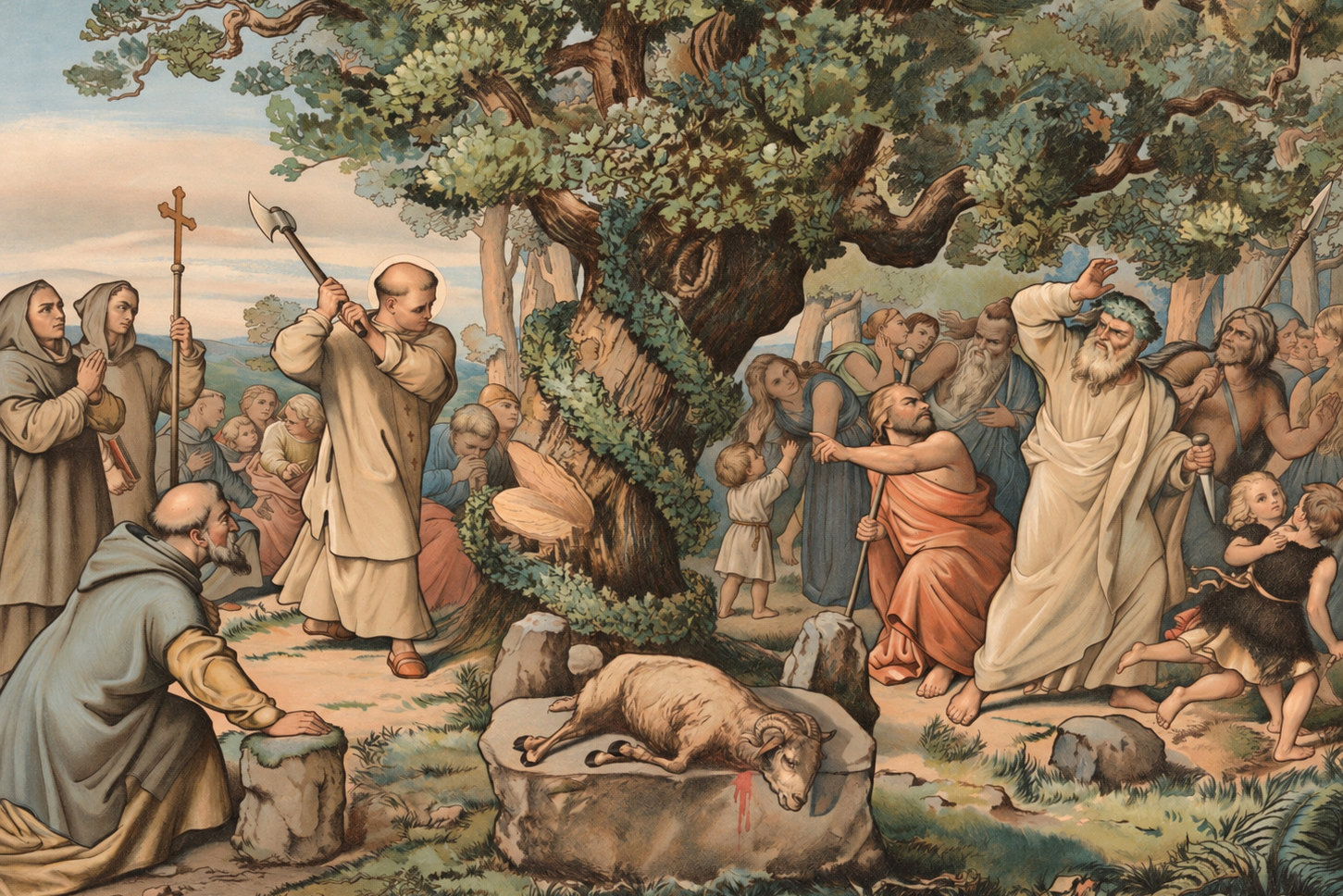
Third, we need missionaries with the courage of Boniface. In the eighth century, the Christian missionary Boniface entered pagan Germany and felled Thor’s sacred oak. The watching pagans expected their god to destroy him. Nothing happened.
Whether confronting revived European paganism, ardent secularism, or the competing religions brought by migration, we need humble, courageous Christians willing to challenge idols and proclaim without apology: Jesus Christ is Lord of the nations.