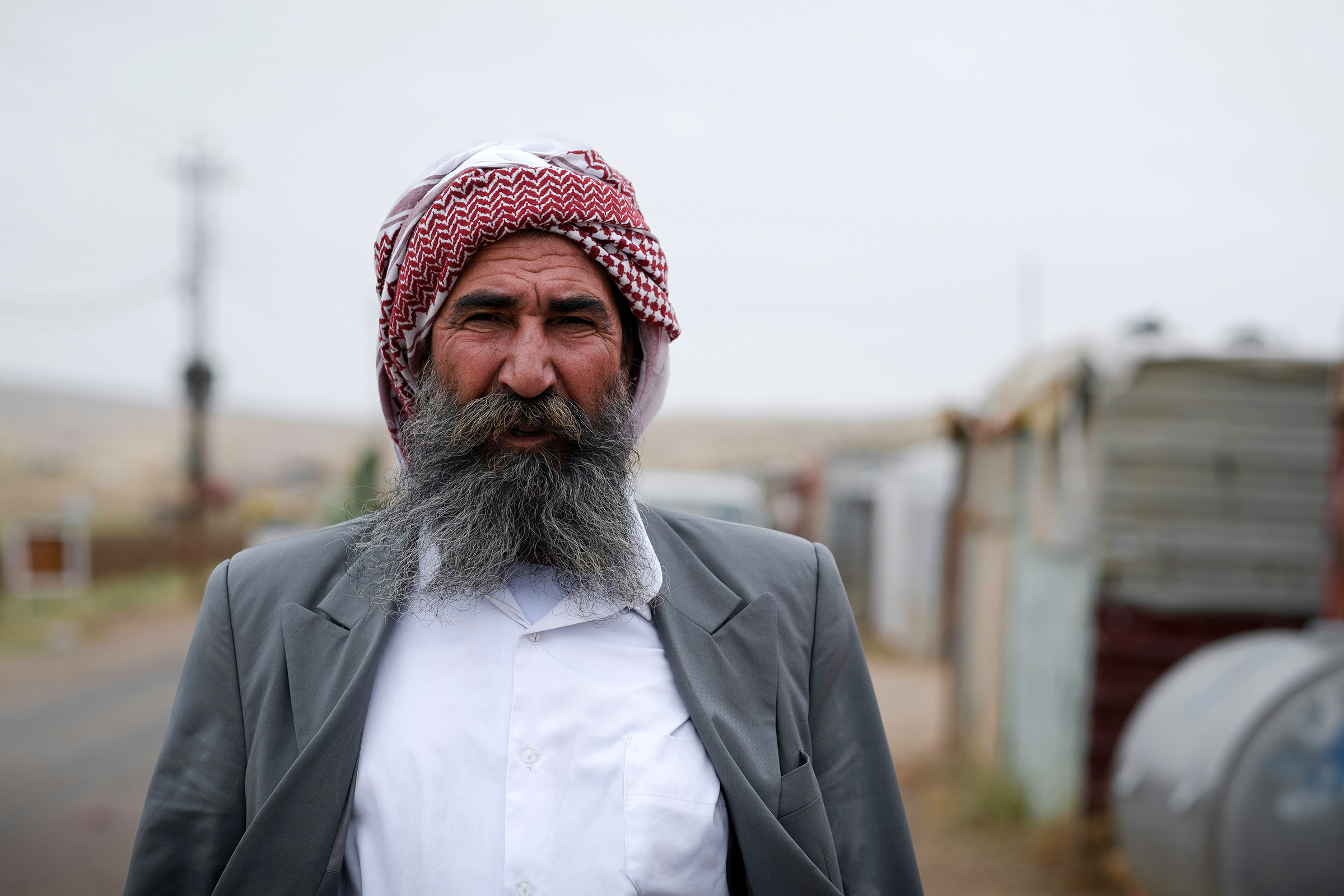



1. Though known as the birthplace of Judaism, Christianity, and Islam, the Middle East is home to a multitude of other groups that are often known as “minority religions.”
While some of these can be considered distinct religions, with unique systems of beliefs and values, others are subsets within the Jewish, Christian, and Islamic traditions. Of course, no one first thinks of his or her religion in terms of the number of adherents. One’s religion encompasses all of life, all hopes and fears, and supposedly answers the most important questions of life. Yet in terms of numbers of followers, several minority traditions in the Middle East can be identified (not all which are included here).
2. Relative to the larger populations of the Middle East, these religious traditions are small.
It is difficult to establish the total population of the Middle East, primarily because of the question of which countries should be included. No consistent delineation of these countries exists. One will often see statements such as “The Middle East typically includes countries such as . . .” Some would include countries of West Asia as well as those of North Africa. The overall population of the region, therefore, is listed as anywhere from 371 million to a bit more than 500 million. Relative to these numbers, certain groups with small populations can rightly be noted as “minority religions.”
3. Some groups in the Middle East are offshoots of Judaism.
Kabbalah and Hasidic Judaism are mystical forms that emphasize spiritual communion with God and often look for hidden meanings in the Jewish Scriptures. Haredi, or Ultra-Orthodox, Jews are very conservative in that they stress strict observance of the ancient Jewish laws and prefer to live in insular communities apart from secular influences. Though small populations of these, and other, branches of Judaism can be found throughout the Middle East, the vast majority of Middle Eastern Jews are found in the nation of Israel. In fact, The Jewish Virtual Library reports that, since 1948, Jewish populations have drastically decreased in Middle Eastern countries other than Israel following their expulsion by Arab countries in 1948 and ongoing persecution.
4. Some religious groups in the Middle East are found within the Christian tradition.
Many of these will be familiar, at least in name, to evangelical readers. These populations are extremely small in number and include Orthodox and Catholic groups—each with smaller divisions within.
The Syriac Orthodox Church claims to have its origin in the first-century church at Antioch. It uses the classical Syriac language in its liturgy and teaches that Jesus possesses full divinity and humanness in one united nature rather than two distinct natures. Another group, the Maronites, primarily found in Lebanon, are fully aligned with traditional Roman Catholicism.
The largest Christian population in the Middle East is that of the Coptic Christians of Egypt. The Coptic Church was founded in the first century and, like the Syriac Orthodox, holds to Miaphysitism, i.e., that, in Christ, the divine and human are combined into one nature with no division. Very liturgical in practice, the Coptics, similar to other Orthodox and Roman Catholic traditions, understand Mary to be an intercessor along with other saints.
Though differing on important matters, these traditions have in common that, although heterodox, they all hearken back to the Christian Scriptures, a monotheistic faith, and belief in Jesus as a prophet or the Christ, and are rooted to some degree in the ancient creeds of the Christian faith.
5. Some minorities are found within the Islamic worldview.
Well-known are the major divisions within Islam. The Sunni comprise close to 90 percent of the global population of Muslims. They follow the teachings of the Qur’an and the teachings and example of Muhammad. Sunnis believe that Muhammad did not explicitly name a successor. Shia Muslims (most of whom live in today’s Iran and Iraq with populations in adjacent countries) believe that Muhammad named his cousin, Ali, as successor, who himself has been followed by a succession of leaders known as imams or ayatollahs. Other differences exist between the Sunni and the Shia, but the question of succession is foundational.
Sufi Islam is not so much a different sector within Islam as it is a mystical, spiritual perspective that emphasizes personal experience of and relationship to God. Additionally, one finds numerous small sects with different emphases on doctrine, practice, and eschatology. Examples are Ahmadiyya, Hanafi, Ibadi, and Ismaili.
6. The minority religions of the Middle East often combine various traditions, even including elements from Judaism, Christianity, and Islam at the same time.
For example, the calendar of the Alawites, an offshoot of Shia Islam, is replete with festivals of Christian, Persian, and Muslim origin. Some groups mix traditions from the majority Middle Eastern religions with animistic beliefs and practices, like the Folk Islam prevalent in regions of North and West Africa, Asia, and the Middle East. Thusly compromised, opposition to these groups by the majority religions can be significant (See 8).
A very old and secretive faith, Druze, combines components from not only Islam but also Judaism, Christianity, and even Hinduism, for the Druze believe in a distinctive form of reincarnation. For the Druze, religion is very much a quiet, personal matter with no religious commandments, institutions, or formal rituals. Found primarily in the countries of Israel, Syria, and Lebanon, the Druze tend to assimilate well among the cultures and peoples of the nations in which they live.
7. These minority groups are often seen by majority populations as heretical, leading to conflict.
In religious matters, the majority religion typically determines what is acceptable and what is not. As just one example of distinctions between larger and smaller groups, the disagreement between the majority Muslim population (Sunnis) and the minority (Shia) has led to warfare and even genocide in certain locations as one group is considered by the other to be heretical. The practical outworking of this situation has caused constant and ongoing tensions in the Middle East.
In religious matters, the majority religion typically determines what is acceptable and what is not. . . . The practical outworking of this situation has caused constant and ongoing tensions in the Middle East.
8. Religious minorities in the Middle East are under duress.
Religious persecution can be a reality for all religious traditions, especially when a particular group finds itself a minority population. The Yazidis are one such ethnic and religious group who have endured centuries of persecution, most recently in the brutal 2014 attacks by the Islamic State, which killed thousands and displaced nearly half a million. This Kurdish speaking people, primarily found in Iraq, believes that a single god has entrusted the care of the world to select angels. Another community, the Ahmadis, are an approximately 200-year-old reformist tradition, emerging out of Islam and teaching that its founder is the promised messiah who has completed the teachings of the prophet Muhammad. They have faced persecution in Central Asia since their beginning. The Hazara are of Persian ethnicity and an offshoot of Shia Islam; their ethnicity sets them apart as much as anything and has led to oppression. These people groups comprise a small sampling of the minority religions in the Middle East who find themselves facing persecution from majority groups.
Persecution is often particularly intense for evangelical Christians in the Middle East. It was so for the early church while it was persecuted by the Romans, and it remains true today. Those who chose to follow Christ may be maligned, opposed, disowned, or even killed by their families or societies. This persecution may extend to others within the Christian traditions. Geopolitical Intelligence Services notes, “According to one report, last year at least 360 million Christians experienced “high levels of persecution and discrimination.”
9. These other religions do not offer a path to salvation and to God anything like that explained in the Christian gospel.
For instance, Baha’i promotes the idea of an earthly universal peace through an emphasis on the oneness of the human race, the oneness of God, and a common religion. The Druze focus on the betterment of other Druze in this life. Even many adhering to Orthodox or Catholic beliefs have not heard or accepted the true gospel.
10. Knowing about these minority religions can help us to better engage them with the gospel.
So, what should be our approach to these groups? Though the gospel is comprised of historical facts (see 1 Corinthians 15:1-11), and these can be declared without reference to any particular cultural context, it is good to have a knowledge of these religious traditions in order to engage them with the gospel by addressing key matters in their worldviews.
Though the gospel is comprised of historical facts . . . and these can be declared without reference to any particular cultural context, it is good to have a knowledge of these religious traditions in order to engage them with the gospel by addressing key matters in their worldviews.
Furthermore, we need to remember—and always emphasize—that the gospel is indeed good news. It is not by works or any personal righteousness but because of Christ that we can freely receive life abundant and eternal. We must share the gospel with those lost in other religious traditions “for it is the power of God for salvation to everyone who believes” (Romans 1:16). When doing so, it is important to remember that the Holy Spirit is the ultimate worker in these situations as he settles the Word of God into hearts and gives life. Of course, this means that we must not only pray that the Spirit will work in this manner, but we must also be sure to give Scripture to our friends; after all, “The word of God is living and active, sharper than any two-edged sword, piercing to the division of soul and of spirit, of joints and of marrow, and discerning the thoughts and intentions of the heart” (Hebrews 4:12).
In all this, we will expect a possibly lengthy process in which our friends jettison long-held beliefs and practices and come to the knowledge of God. As we persevere in our witness, we will bathe all we do in prayer to the God who saves.