


While reading a popular volume on the nature of the gospel, I marveled at God’s work in redemptive history.
The author described a four-stage view (Creation, Fall, Redemption, Consummation) and offered a clear exposition of the plan of salvation through the person and work of Jesus Christ. Yet, there was something missing.
In the entire text of the book, the Holy Spirit was only mentioned seven times. Now, that may be considered a perfect number, and perhaps the length of the book had delimiting factors, but I sense that it goes a bit deeper. I’ve noticed that in the current evangelical and missional landscape—from our gospel presentations to our liturgies and prayers—the Holy Spirit is more of an afterthought.
Now, I could easily spend my time talking about the myriad benefits the Holy Spirit brings to us—not to mention the fact that he is God. However, in the context of missions and the sending purposes of the Triune God, the best first step toward regaining our perspective on the Holy Spirit is to clarify the way Pentecost relates to the mission of God (missio trinitate or missio dei) and to the good news of the gospel.
What Does Pentecost Signify?
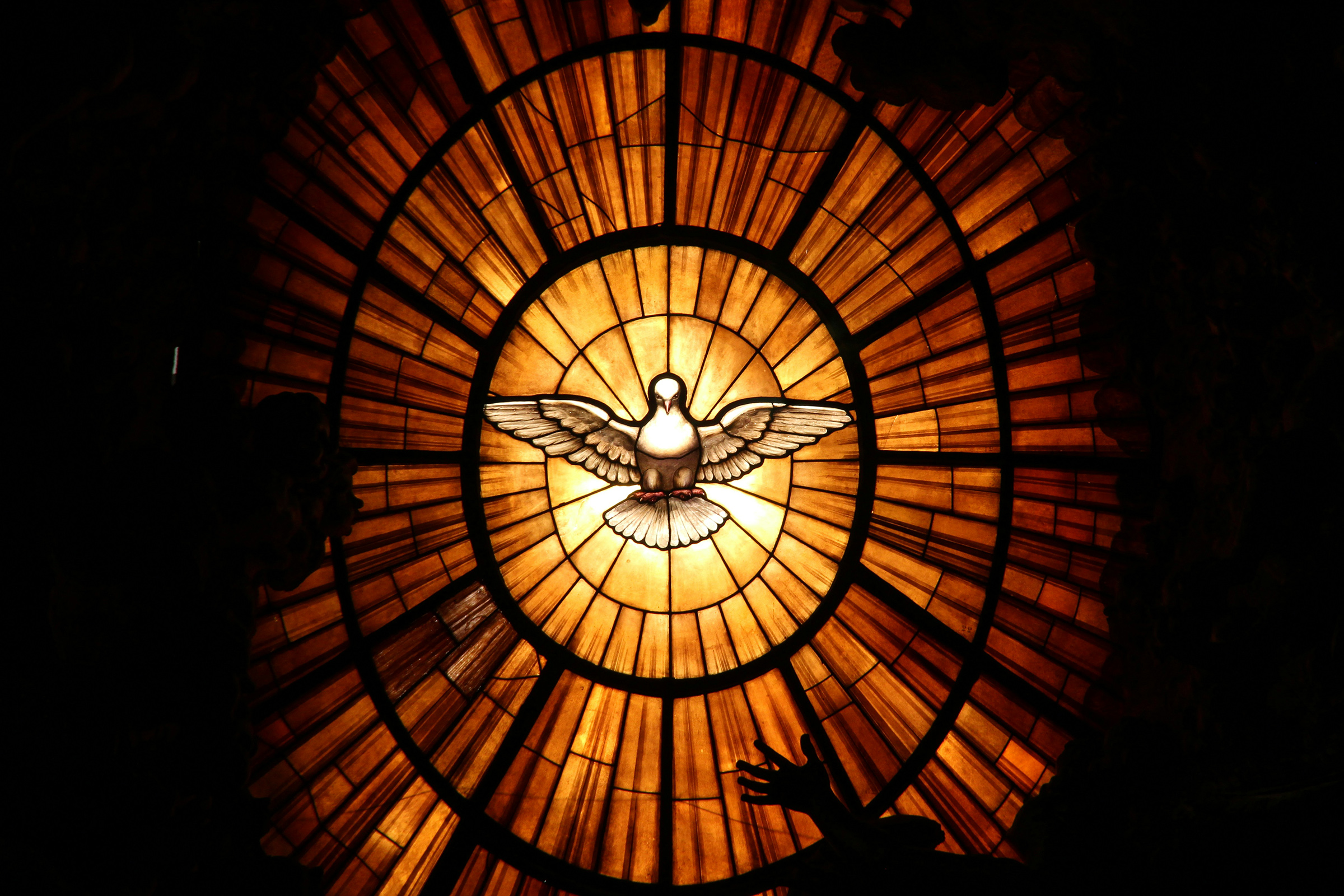
Pentecost, described in Acts 2, was one of those unique occasions in redemptive history when the personality of God was set on full display. At various times in Scripture, the persons of the Trinity clearly reveal their role. It is arguably the case that Jesus could not be understood as who he truly is—the Son of God—until after the resurrection (see Luke 24). God the Father is not really understood to be Jesus’ Father until Jesus arrives on the earth and, through his ministry of teaching, begins to unfurl the mystery of the adumbrations (foreshadowing) that abound throughout the Old Testament. Likewise, Pentecost becomes one of these kinds of occasions when the Holy Spirit (also called the “Spirit of God,” “Spirit of Christ,” and “promise of the Father”) becomes manifest in a theophany of tongues of flaming fire. Similar to his appearance at Jesus’ baptism in the form of a dove, the Spirit is present in a palpable way and elicits a visceral response: the people begin praising God in foreign tongues.
But what was Pentecost anyway—the Jewish festival the disciples were observing? Leviticus 23:15–21 instructs the Israelites to hold an annual one-day harvest festival seven weeks, or 50 days, after Passover (see also Exodus 34:22). This festival included extensive sacrifice (Leviticus 23:15–21, Deuteronomy 16:9–10, 2 Chronicles 8:13). At Pentecost, also known as the Feast of Weeks, Israelite farmers would start their journeys toward Jerusalem to present their firstfruit offerings.[1]
Thus, the significance quickly comes into focus: during Passover, Jesus secured the salvation of his people through becoming the perfect fulfillment of the sacrificial lamb, and, at Pentecost, God sealed and empowered his firstfruits through an ingathering of souls who typify his plan for the Church that continues to this day. As the festival of Pentecost represented a thankful time of offering back to the Lord what he had provided, it was even more fitting that, in Jerusalem, God sent his Spirit to emphasize what the Son’s death and resurrection had accomplished. But I believe the significance of Pentecost is still deeper.
How Does Pentecost Impact Missions Today?
Some have famously quipped, “Everyone needs to have their personal Pentecost.” While the sentiment may be in the right place, the idea of its repetition is absurd. Just as the first advent of Christ and each subsequent event leading to his death and resurrection is uniquely important, unrepeatable, and intended to reveal something of God, so too is the reality of Pentecost.
The work of Christ was a one-time event that accomplished atonement (propitiation) for all of God’s people and is then applied individually throughout history. So, too, the one, holy, catholic, and apostolic church (comprised of many individual members) receives her one baptism at Pentecost. This baptism empowers the church for all time, and, as Reformed theologian Richard B. Gaffin writes concerning the language of firstfruits, it is “the partial nature of our present possession of the Spirit and equally the organic connection, the integral tie there is between this present partial possession and its future fullness at Christ’s return.”[2] In other words, the uniqueness of this event is meant to tie us to an even fuller future experience of the Spirit—the return of Christ.
It is not until the “appearing of Christ” that believers will receive their resurrected bodies and experience the fullness of the Spirit. Therefore, as we consider the significance of Pentecost for missions, we ought to realize that, as with Jesus’ earthly ministry and all that it accomplished, our salvation is not “complete” until our resurrection from the dead! This motivates our mission—to keep growing, making disciples, going to the nations, and praying for the Lord Jesus’ help even as we pray for his blessed return!
Jesus’ leaving was our benefit precisely because the Spirit’s arrival was imminent. However, the Spirit’s coming was not intended to be a one-time event exclusive to the first generation of the church, causing us to lower the bar of our expectation of experiencing his presence.
Jesus—who possesses all the Father’s authority—chooses to exert that authority in his Word and through his disciples as he sends them into the world with his message (Matthew 28:18-20). Similarly, the Spirit takes his authority and, through the active witness of Jesus’ disciples, becomes the agent of transmitting Jesus’ authority to new disciples. When the Spirit baptizes new believers into Christ (see 1 Corinthians 12), they are empowered to live obediently and to observe all of Jesus’ commands with a desire which flows from a new heart. This is what ties Pentecost to the ultimate mission of the church.
How Does Pentecost Relate to the Gospel?
As I was reading that book about the gospel, I remembered the assurance and empowerment I experienced thanks to the Holy Spirit’s work in my life as a newly converted Christian at age 20. At that time, J.I. Packer’s Knowing God was instrumental in helping me understand the spiritual concept of adoption, and I became overwhelmed at both the knowledge of God’s love for me and the certainty of his commission to go and preach—so I did!
My understanding of the Holy Spirit’s empowering became solidified as I read through the many passages in the Hebrew Scriptures which clearly anticipate the New Covenant: the Spirit written on men’s hearts (see Jeremiah 31, Ezekiel 36-27, and the circumcision of hearts in Deuteronomy 18). There is an undeniable reality that what was undone through Adam and Eve’s sin in Eden is being restored, in one sense, in the church (i.e., walking in community with God through his Son and by the Spirit), and this fulfillment was intended to occur in conjunction with the accomplishment of God’s creation mandate to subdue the earth and multiply God’s image bearers over the face of it.
What all this means for our understanding of the gospel is that, as great a benefit or result the Holy Spirit may be in our union to Christ, Scripture makes clear that receiving the Holy Spirit is a much a part of the gospel as what Christ has accomplished for our salvation. The Holy Spirit is not simply a biproduct of salvation. He is, in one sense, the one who saves us by applying Christ’s work through our union with him by faith and by sealing, sanctifying, and securing us for final redemption.
I want to submit to you that, if we are to fully explain and understand the gospel, we should share not only how we might be reconciled to a Holy God through Christ’s blood, but also that part of that reconciliation involves participation in God’s life, which occurs when Holy Spirit unites us to Jesus through faith.
Why We All Need To Be a Bit More “Pentecostal”
In conclusion, if missions—our sentness to the world—is essential to the Christian life and the purpose of the church, then it must follow that we view Pentecost differently. God, with intentional timing and purpose, sent his Spirit to the disciples on the day of Pentecost to catapult his church into the world. In response, we ought not only to thank God for this awesome gift, but also to seek the Holy Spirit to be our empowerment and our source of love, peace, joy, and hope when we feel defeated by sin, Satan, and the systems of this world. Dare I say, we all need to be a bit more Pentecostal in our recognition of our dependence on the Holy Spirit in all areas of life. We should remember that, were it not for him, our salvation would not be possible—nor would our sanctification and Christian life.
God, with intentional timing and purpose, sent his Spirit to the disciples on the day of Pentecost to catapult his church into the world.
My intention in drawing attention to the Holy Spirit in this article—and my exhortation to do so more frequently—is not motivated by a desire for esoteric or mystical experiences. Rather, I propose that our mystical union with Christ would be elevated as we contemplate and live correctly in light of “so great a salvation”!
The world would be better off with a few Spirit-empowered witnesses than a myriad of cultural Christians who are missing the fullness of what God has for his people. May holy revival break out as God grants repentance from sin, renewed desire for holiness, and an unexpected longing for the lost to be saved and for the appearing of Christ to come quickly!

[1] Ronald D. Roberts, “Pentecost,” in The Lexham Bible Dictionary, ed. John D. Barry et al. (Bellingham: Lexham Press, 2016).
[2] Richard B. Gaffin, In the Fullness of Time: An Introduction to the Biblical Theology of Acts and Paul (Wheaton: Crossway, 2022), 139.