


For God, who said, “Let light shine out of darkness,” has shone in our hearts to give the light of the knowledge of the glory of God in the face of Jesus Christ. (2 Corinthians 4:6)
In northern Thailand during October and November, people decorate temples, storefronts, and homes with colorful paper lanterns.
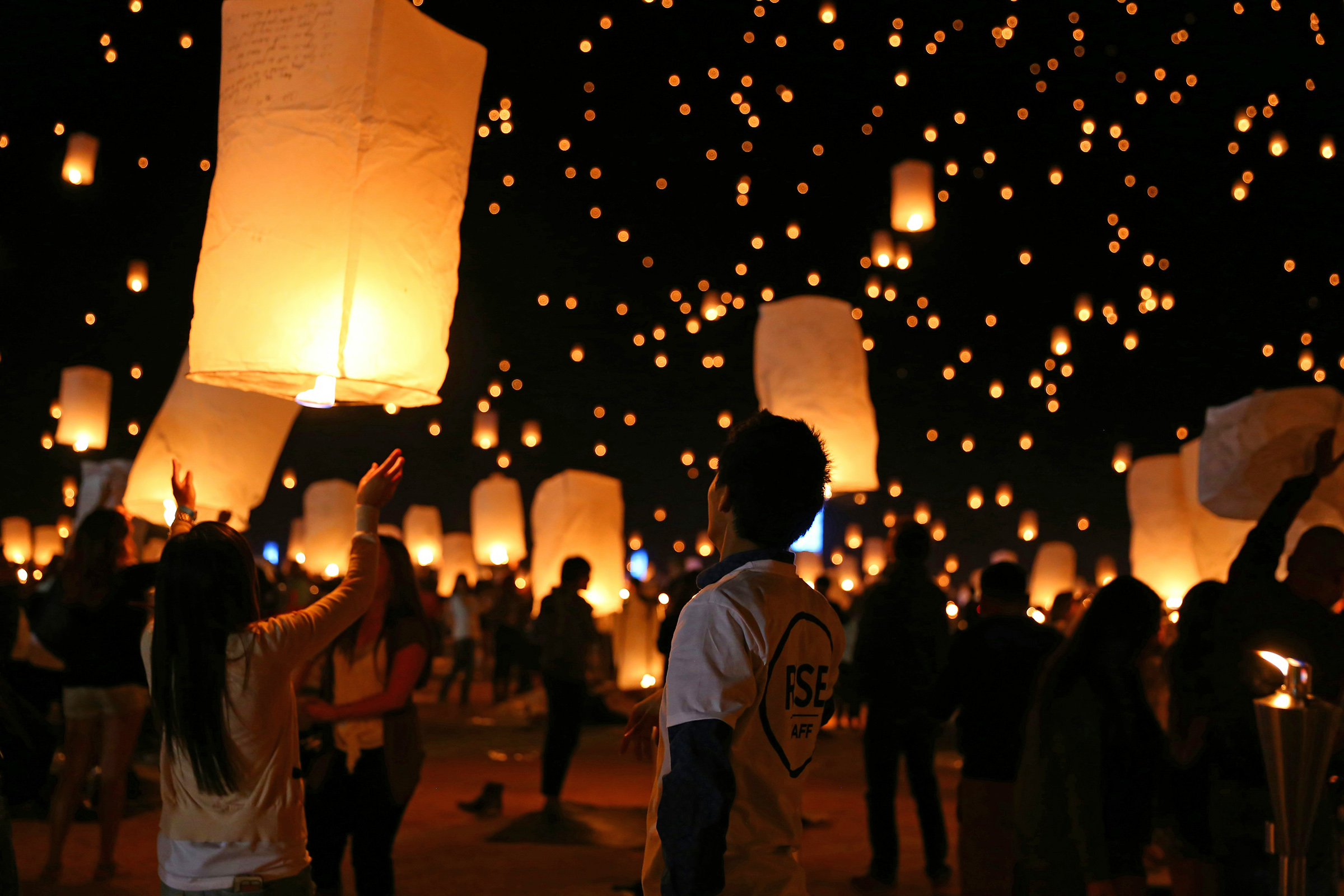
The lanterns are put up to celebrate two Thai festivals rooted in Buddhism and animism: the Yi Peng Lantern Festival and the Loy Krathong Festival. Lit up on a dark night during a full moon, the vibrant hanging lanterns are beautiful. When surrounded by hundreds of similar floating lanterns being launched into the night sky, our family feels like we’ve entered the magical world of Rapunzel from the Disney movie Tangled. However, the dazzling light that these lanterns produce ultimately has darkness at its core.
Light in Buddhism
Thai people frequently write two types of prayers on these colorful lanterns: confession of sins and wishes for health, wealth, love, and other blessings. Their hope is that by paying money to hang their lanterns in a temple or to launch them into the night sky, their prayers will be more likely to reach the heavens and be granted. Through releasing the lanterns, they attempt to dispel the negative aspects of their lives, such as guilt, shame, and bad luck, in order to gain wisdom or prosperity.
A famous quote from Buddha urges his followers to “be a lamp unto yourselves; be a refuge to yourselves; betake yourselves to no external refuge.”[1] This idea is a central teaching in Buddhism: individuals must rely on themselves in order to gain spiritual enlightenment. It is up to followers of Buddha to find within themselves the strength to end suffering, desire, and reach a place where they are free from needing anyone or anything. While some pursue this through a lifetime devotion to Buddhism’s Eightfold Path, consisting of wisdom, ethical conduct, and mental discipline, others seek deliverance from suffering and desire through rituals. However, even these attempts can leave them feeling alone in the dark, searching for enlightenment.
Light in the Old Testament
As Christians, we have a God who does not leave us to grope in the darkness; rather, for eternity, God has been bringing light out of darkness. Our God is the God of true light.
In the beginning, he said, “Let there be light” (Genesis 1:3), and his words caused glorious light to pierce the dark expanse. During desert nights, God guided his people, freed from slavery in Egypt, “as a pillar of fire to give them light” (Exodus 13:21). In God’s tabernacle, he commanded “that a light may be kept burning regularly” in the holy place that represents his presence with his people (Leviticus 24:2). After defeating the Israelites’ enemies, David declared of God, “You are my lamp, O Lord, and my God lightens my darkness” (2 Samuel 22:29, Psalm 18:28). Through the prophet Isaiah, God promised to lead the blind along a new path as he literally “turns the darkness before them into light” (Isaiah 42:16). Isaiah also foretold the Messiah who would bring light to our dark world: “The people who walked in darkness have seen a great light; those who dwelt in a land of deep darkness, on them has light shone” (Isaiah 9:2).
Light in the New Testament
Then, bursting forth like a shooting star across a dark sky, the true Light arrived (John 1:9). Jesus said, “I am the Light of the world. Whoever follows me will not walk in darkness, but will have the light of life” (John 8:12). Jesus shone the light of truth into the hearts of those who chose to follow him (2 Corinthians 4:6). He then appointed his followers to be lights when he said, “You are the light of the world. A city set on a hill cannot be hidden” (Matthew 5:14). And, as believers, we know that someday we’ll dwell on the new earth where we’ll have no need of the sun or moon because our lamp will be the Lamb of God (Revelation 21:23).
More Than Temporary Lights
The Thai festival of lights ironically blinds the Thai people to understanding and accepting Jesus as the true Light. God longs to turn people’s hearts away from false hopes that promise light but only bring darkness. He desires to bring people into a relationship with himself so that their lives can be illuminated by the gospel and they can receive forgiveness of sins and hope for the future.
As missionaries in Thailand, we do not lose heart in our ministry because we know that the light of the gospel is stronger than the temporary lights of this world. God alone causes light to shine out of darkness (2 Corinthians 4:6). We know the end of the story: the true Light wins.
“The light shines in the darkness, and the darkness will not overcome it” (John 1:5).

[1] F. L. Woodward, trans., Mahaparinibbana Sutta 6.1 (London: Buddhist Society, 1974).