

Should missionaries preach the gospel or dig wells?
Most of us instinctively answer “both”—and that instinct is right. But it dodges the harder question: when word and deed compete for limited time, people, and money, which comes first?
A few years ago, I discussed that question with Dr. Ray Norman of World Vision in a friendly dialogue hosted for a group of missionaries, later aired on The Missions Show.
The historic options run along a spectrum. On one end sits liberationism, which reduces the mission of the church to social action. On the other sits a functional gnosticism that cares for souls while ignoring bodies. Between them lie holism, which makes evangelism and social action coequal, and prioritism, which holds that proclamation comes first while social action remains necessary.
Evangelicals have wrestled over this ground for decades. The Lausanne Covenant (1974), shaped by John Stott, affirmed that “evangelism and socio-political involvement are both part of our Christian duty” while still insisting that “in the Church’s mission of sacrificial service evangelism is primary.” Later voices pulled away from that prioritist note, including René Padilla’s “integral mission” model, the Micah Declaration (2001), and eventually Lausanne’s own Cape Town Commitment (2010), which dropped the affirmation of evangelism’s primacy altogether.
My own position is a modified prioritism—what William Larkin of Columbia International University called an “expansive” prioritism—drawing on David Hesselgrave’s Paradigms in Conflict and Stott’s Christian Mission in the Modern World. The 1966 Wheaton Declaration captured it well: “we reaffirm unreservedly the primacy of preaching the Gospel to every creature and we will demonstrate anew God’s concern for social justice11 and human welfare; That evangelical social action will include, wherever possible, a verbal witness to Jesus Christ.”
Here are seven truths from that conversation worth holding onto.
1. The gospel is bigger than a soul-winning formula.
Before we rank word and deed, we should define our terms. The gospel is more than just four spiritual laws about how to save your soul. It is also the announcement of what God has done in Christ—that Jesus is Lord, crucified and risen. Personal salvation is the application of that news, not the news itself.
And because Christ is Lord over all of life, his gospel carries implications for individuals and societies alike. Prioritism, then, doesn’t shrink the gospel; it insists that the announcement itself must actually be announced.
2. Jesus treated poverty as more than a physical problem.
Scripture says much about the poor, and Jesus said perhaps the most. But in his preaching, poverty was never merely material. “Blessed are the poor in spirit,” he taught (Matthew 5:3), pointing beneath the surface.
Physical poverty is real and grievous, but in Jesus’ teaching it points to a deeper spiritual emptiness that only God can fill. This is not a narrowly prioritist reading. Even thoughtful holistic practitioners, like the authors of When Helping Hurts, recognize that poverty is a symptom of layered spiritual realities, with man’s broken relationship to God at the root.
3. Jesus’ miracles pointed to salvation.
The miracles Jesus performed in his earthly ministry are often cited as proof that Jesus ministered holistically. On closer examination, however, the miracles themselves point in a different direction.
For instance, when the paralytic’s friends lowered him through the roof, Jesus led with “your sins are forgiven,” then healed the man as proof of his authority to forgive (Matthew 9:1-8). Or consider the 10 lepers. Though 10 were cleansed, only one returned in faith, and only to him did Jesus say, “your faith has made you well” (Luke 17:11-19)—the Greek verb here being sōzō, the New Testament’s word for salvation. Or consider the way in which Mark sets a blind beggar’s healing right after the rich young ruler walks away blinded by wealth, illustrating the regeneration opens blind eyes.
The healings were never ends in themselves; they were signs pointing to the Savior. We should view acts of compassion performed in Jesus’ name today through a similar lens.
4. Every Great Commission text centers on proclamation.
There are multiple commissioning texts in the Gospels and in Acts. In Luke 24:46-48, we find that repentance and forgiveness of sins is to be proclaimed to all nations. In Acts 1:8, Christ declares, “you will be my witnesses . . . to the end of the earth.” In Matthew 28:18-20, we see that the object of the apostolic mission is to make disciples of all nations, baptizing and teaching them. And in John 20:21-23, Jesus sends the disciples as the Father sent him, and in this context he immediately speaks of the forgiveness of sins.
Taken together, these texts are an evangelistic, disciple-making mandate that assumes church planting. Whatever version of the Great Commission we turn to, then, it cannot be obeyed without preaching.
5. The apostles obeyed the Great Commission by preaching.
If you want to know how the apostles understood Matthew 28, watch what they did in Acts. The book records roughly 19 sermons, and the seven major ones (Acts 2, 3, 4, 5, 10, 13, and 17) share a common skeleton: they begin with God, recount the gospel events, hold out forgiveness and the Spirit, and demand repentance and faith. Alan J. Thompson traces this pattern in The Acts of the Risen Lord Jesus.
When mercy ministry threatened to crowd out their preaching responsibilities, the apostles established the diaconate rather than abandon their post: “It is not right that we should give up preaching the word of God to serve tables” (Acts 6:2). In this passage, the ministry of the Word and prayer were of first importance; the ministry of mercy, while vitally important, was placed as the second priority.
Paul reflects the same order when the Jerusalem church affirmed his gospel and asked him to remember the poor, “the very thing [he] was eager to do” (Galatians 2:10).
6. Good deeds serve the gospel—they never replace it.
It bears repeating that prioritism is not exclusion—putting proclamation first is not the same as pushing mercy aside. Hesselgrave, the dean of traditional prioritists, wrote that the church’s mission “is primarily to make disciples of all nations. Other Christian ministries are good but secondary and supportive”—while warning in the same breath against “neglecting social ministries on the one hand or confining cross-cultural work strictly to evangelism on the other” (Paradigms in Conflict).
Jesus commands good works, and he tells us what they are for: that others “may see your good works and give glory to your Father who is in heaven” (Matthew 5:16). In other words, deeds are meant to lead the watching world to worship God, not merely to admire us. Even the popular claim that deeds “open hearts” to the gospel assumes prioritism, because a bridge exists for the sake of its destination.
Nor does this threaten our doctrine of regeneration. In Ezekiel’s vision, bone came to bone, and flesh covered the bodies before breath entered them (Ezekiel 37). At the risk of overextending the analogy, the sequence in this vision is nevertheless instructive; the Spirit is the efficient cause of the new birth and the Word is his instrument, but the Spirit is free to use preparatory means along the way. Deeds can till the soil, but only the seed of the Word produces life.
7. Missions history confirms the priority.
William Carey gave modern missions its archetype: preaching, Bible translation, and church planting stood at the center, while his labors in education, journalism, botany, and social reform (including the fight against widow burning) flowed outward from that center and helped shape modern India.
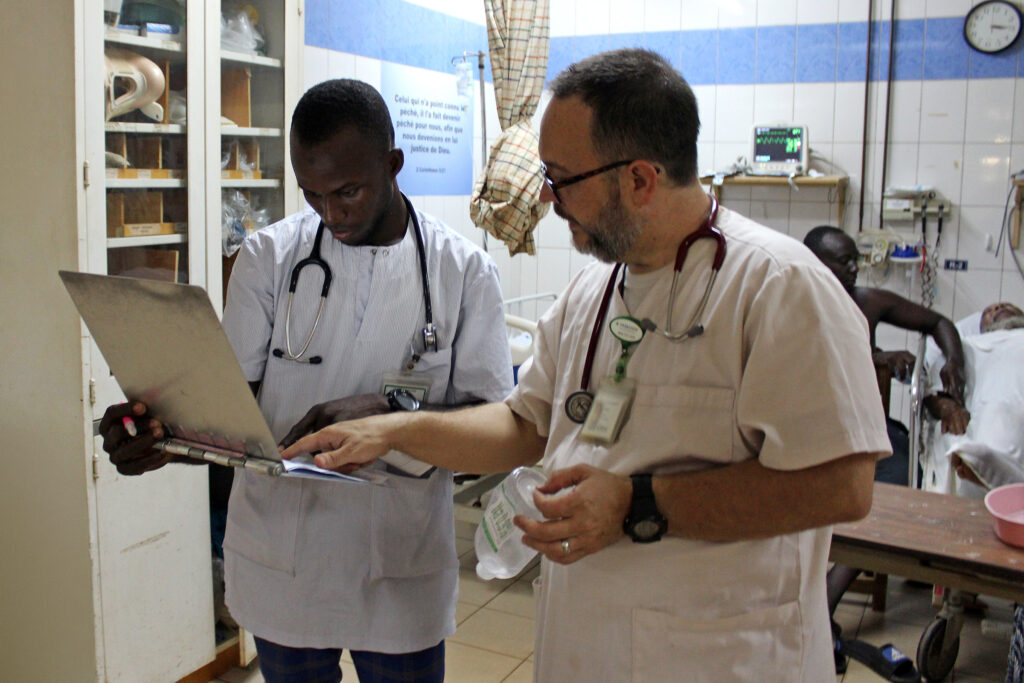
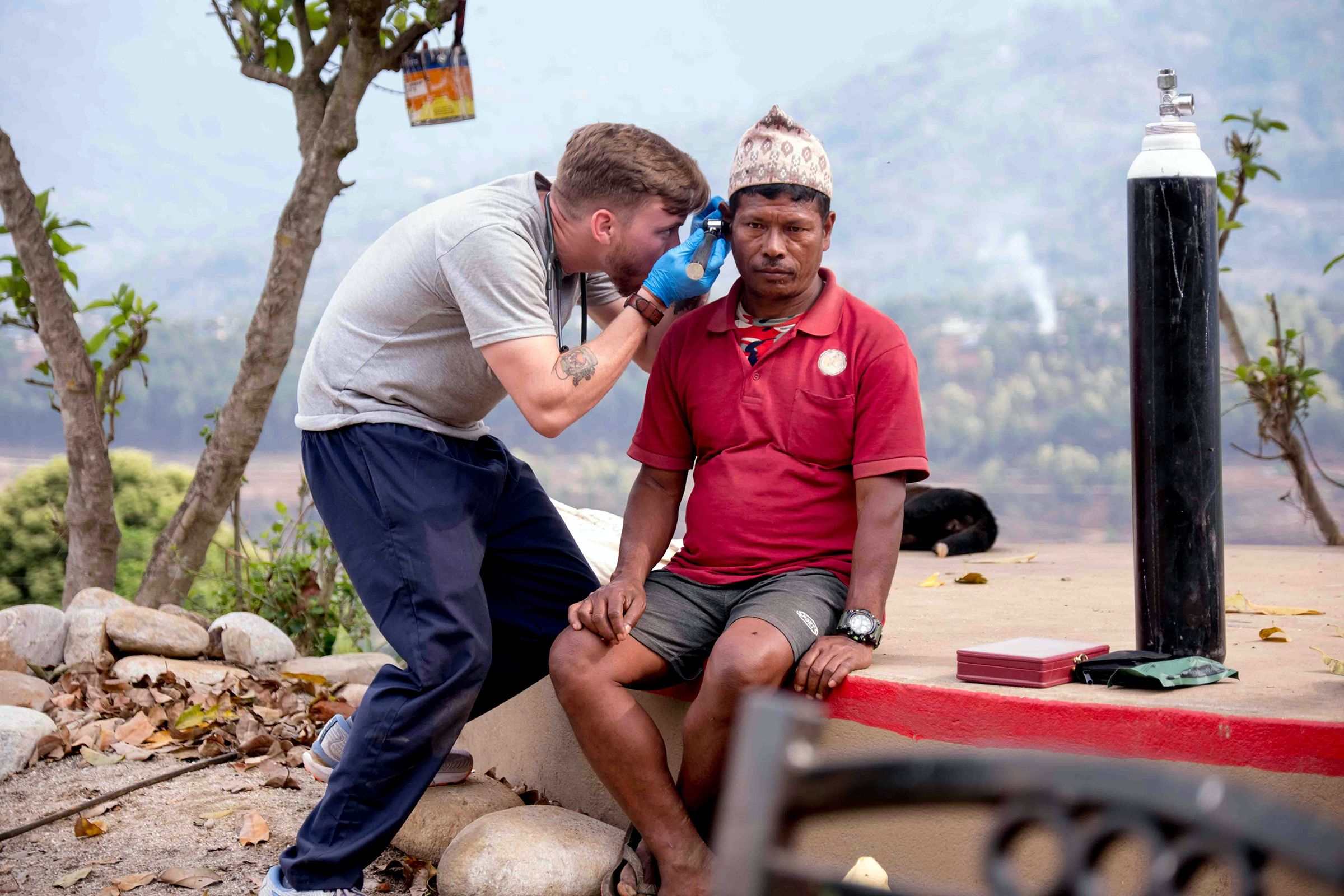
ABWE’s own history follows that same pattern. Dr. Raphael Thomas, the medical missionary whose work led to the mission’s founding in 1927, refused when modernist-leaning leaders pressured him to quiet his evangelism and simply practice medicine. Nearly a century later, ABWE still sends doctors, nurses, and development workers, with proclamation and church planting fixed at the center.
Larkin summarized the balance well. Early church preaching, he argued, held out a kingdom of “transcendent, eschatological salvation with temporal consequences,” and grasping that clearly “points to an expansive prioritism as the best way to relate evangelism and social responsibility in the church’s mission today.”
The stakes here are not merely academic. If our theology of mission lets us downplay evangelism, the unreached will simply remain unreached—served, perhaps, but never told. Word and deed belong together, and healthy missions will always hold them together. But word and deed follow a natural order: the gospel must first be proclaimed, and its messengers must live as though they truly mean what they preach.

- Note: the use of this quotation is not an implicit endorsement of all the modern connotations of the loaded term “social justice.” For purposes of the present discussion, the term here is simply being used to describe mercy ministry or acts of compassion performed as a part of Christian duty and outreach. ↩︎