

Around 15 years ago, I was first trained in Church Planting Movements, an idea largely founded and developed by David Garrison.
Later, I was trained in the methodologies of Disciple Making Movements (DMM) and their product, Discovery Bible Studies (DBS), popularized by David and Paul Watson.
Since then, the whole movement mentality has become very popular. It is common for me to receive messages from other colleagues, missionaries, and missions organizations asking if I have ever written on the good, the bad, and the ugly of DMM and DBS.
I am in the process of writing more extensively on these things, and this brief summary will hopefully be helpful and honest. Too many people are afraid to say things that might be perceived as rebukes, challenges, or critiques because they fear being accused of quenching the Holy Spirit, getting in the way of God, or not having enough faith.
I think those are fallacious arguments.
The Fear of Critiquing Movements
Many people are enthusiastic about these methods. Many have also been duped or even manipulated by enthusiastic personalities. They hear stories about how God supposedly worked in certain cities, and then they begin to believe that if we can just do what they did—if we can replicate the methods they used to tap into the movement of the Holy Spirit—then we can manufacture the same results in our own context.
The motivation behind rapid-cycle church planting movements is the idea that if we can set into place some sort of movement of God among an indigenous people, using the most basic and fundamental understanding of the church in the Bible, then that movement will duplicate and replicate many times over.
Much of this is motivated by a misunderstanding of Matthew 24:14:
“And this gospel of the kingdom shall be preached as a testimony to all the nations, and then the end will come.”
Some people take that verse as our marching orders. They believe it is our job to hasten the return of Christ by getting the gospel out to all nations. Of course, that motivation seems noble. It seems audacious. And in one sense, it is.
But there is no imperative in the text. The verse gives only an indicative, an assurance and promise.
Matthew 24:14 As Promise, Not Pressure
Jesus is not putting the proverbial ball in our court, as if he were saying, “I am going back to heaven, and I will be waiting until you get the job done. I will send you the Holy Spirit for some help, but you have to figure this out—and the quicker you do, the better.” He is not saying, “If you do this, then I will come back,” or even, “You must do this so that I can come back.”
Matthew 24:14 is riding on the coattails of the context before it. In verses 12-14, Jesus talks about how, “in those days,” the love of many will grow cold, and lawlessness will increase. But the one who endures to the end will be saved.
So in this context of increased lovelessness, lawlessness, and the need to faithfully endure firm until the end, Jesus says: “And this gospel of the kingdom shall be preached as a testimony to all the nations, and then the end will come.”
Jesus is saying that it will get done.
The Great Commission will be finished in the context of immense darkness, lawlessness, and cold-heartedness. When you think all hope is lost, when you think there is no hope for the triumph of the gospel among the nations, it will get finished.
The testimony will go out. The people of God will endure firm to the end, bearing witness to all the nations. And then the end will come.
The end will come because Jesus himself, through his church, will bring it about. It is not our job to build the church. Jesus is the head of the church, and he says that he is the one who builds his church. He is the one who establishes his kingdom.
It is not our job to build the kingdom.
The Problem with Movement Mentality
The whole premise behind Disciple Making Movements and Church Planting Movements is a movement mentality. To me, this is both frustrating and disheartening.
I am frustrated because many big-hearted missionaries—good-hearted but exhausted missionaries—adopt these methods thinking that they have finally figured out how the Holy Spirit really wants to move. They begin to think the Holy Spirit is simply waiting for missionaries to decode the encrypted puzzles in God’s providence.
If we can just do it right, with purity of heart, with the right amount of personal and corporate prayer, with unity of purpose as we walk in lockstep with the Holy Spirit—if the city is united under the banners of loving Jesus and loving people, and if we put into practice these Discovery Bible Studies—the Holy Spirit will be poured out and we will see movements and movements of people come to faith in Christ.
I love the sentiment. I truly appreciate the optimism. Praise the Lord for the desire to see people come to Christ.
But the reality is that the gospel typically grows slowly, like a seed.
The Gospel Usually Grows Slowly
Once in a while in church history, we do see great accelerations of the Holy Spirit. We usually call those revivals.
But typically, for there to be a revival, there must already be some kind of Christian structure in place that the Holy Spirit can revive. In other words, revivals happen in places where the Christian worldview already exists—or has at one time. There is already a Christian framework that people are familiar with. They may even respect or appreciate it, and those who have rejected it can still see its plausibility. But this framework must be present in order for it to be revived.
But in pre-gospel contexts—places where people have not heard the name of Christ or where they are not familiar with Christian teaching—people have no idea what goes into the Christian worldview. There is nothing for the Holy Spirit to revive.
The Long Slog of Frontier Missions
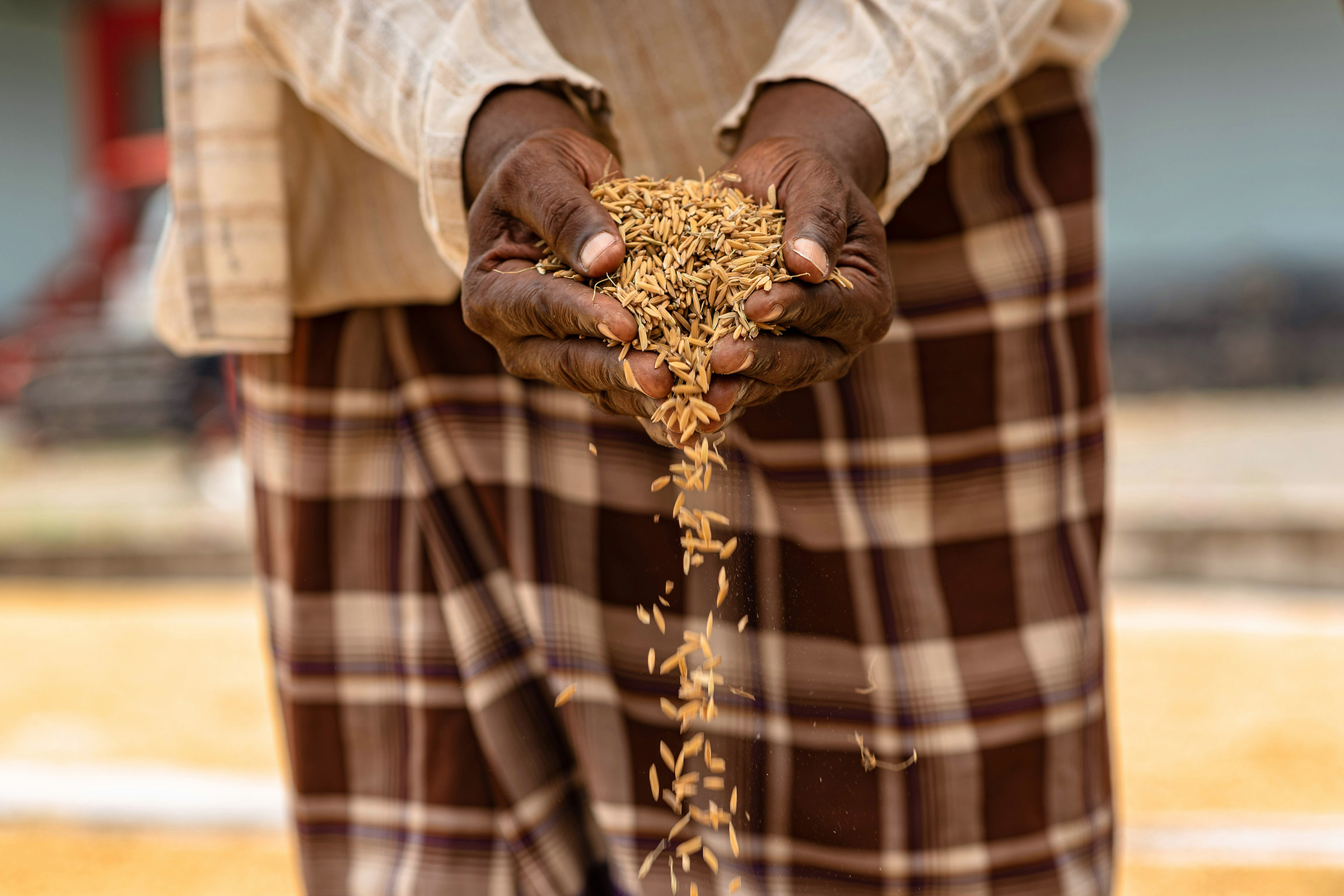
Frontier missions involves the long, hard work of sowing the gospel seed, pulling out weeds, picking up rocks, and keeping the birds from eating the seed. We labor to keep the seed in fertile soil. It is long, slow work, and it takes time for seeds to grow.
Then, once there is a harvest, it will come in waves and seasons. There will be seasons of drought. There will be seasons of harvest. There will be seasons of theft, where thieves come in and steal the fruit, the vegetables, and the harvest.
The work of missions includes all the stages involved in harvesting and maintaining the crops. But we cannot usually expect in frontier missions the same kind of revivals we saw in Christianized Europe centuries ago or in colonial America generations ago.
As enthusiastic or committed we may be, we still have to do the long, hard, life-long labor of planting seed, watering it, cultivating it, and protecting it in order to arrive at the harvest.

Editor’s Note: A version of this article was originally published on Frontier Dispatch on June 2, 2026. Used with permission.