


Even in the chaos on the streets of Phnom Penh, Cambodia, there are moments of striking color that force us to look at our own hearts.
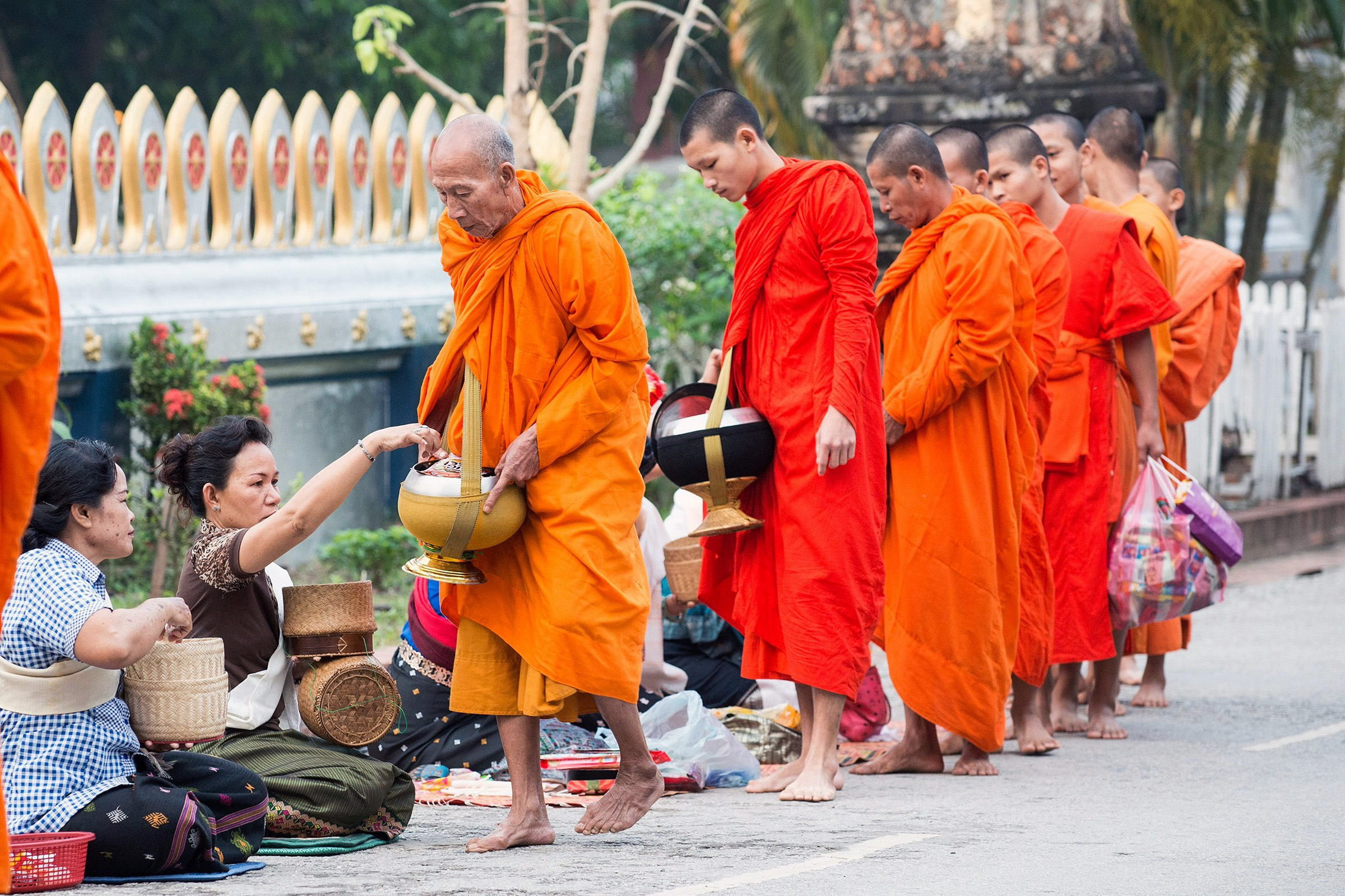
Buddhist monks dressed in bright orange sarongs move methodically from shop to shop, begging for alms. Watching the locals interact with them is fascinating. It is hard to tell whether they give out of deep religious obligation, cultural duty, or just a slight hint of daily annoyance, but people regularly pay them off with food or money.
Watching this transaction unfold, I could not help but reflect on the profound contrast between this cycle of merit and the reality of the gospel. In many corners of the world, spirituality is a transaction—an endless circle of trying to earn favor or merit, appease a deity, or fulfill a duty out of fear or obligation.
It is easy for us to view this as a purely foreign concept, but if we are honest, many of us in the West do the exact same thing without even realizing it. Even believers still try to earn God’s favor and earn our Father’s love. We treat our relationship with the Lord like a business deal, secretly believing that when things go wrong, it means God hates us or is punishing us. We constantly try to negotiate with God, offering up our good behavior or our church attendance in exchange for a smooth, trouble-free life.
But the message of Jesus breaks entirely through that exhausting paradigm. The gospel tells us that we do not have to pay off God with our good deeds, our money, or our rituals. We cannot buy his favor because he gives it freely. Where religion demands that we earn our way up, the gospel is about a God who came down to us, offering a relationship built not on obligation or negotiation, but on unconditional grace and love.
Scattered and Redeemed
Just before I stopped recording my thoughts, the chaotic energy of the city delivered a perfect micro-drama. A truck overfilled with empty plastic bottles took a sharp turn, and a massive bundle dumped off, spilling over the asphalt.
Immediately, the driver stopped in the middle of the moving traffic (I do not know if you can really picture how crazy that was), frantically trying to chase down the lightweight projectiles before the wind blew them away. It was a race against time as oncoming tuk-tuks and carts, attempting to pass him from behind, threatened to smash them into the ground.
It felt like a living picture of human brokenness—scattered, messy, and trying to gather the pieces of life before they are completely ruined by the traffic around us. Yet, unlike that lone driver struggling by himself in the street, the gospel reminds us that we are not alone to clean up our messes. We have a Savior who steps directly into our chaos, pursuing us in our scattered mess, to rescue and restore what is lost.
The Work Is the Lord’s
Visiting Cambodia does not allow you to watch it from a distance; it forces you right into the middle of the frame. It is loud, smoky, dirty, and yet absolutely alive. It is a place where the physical traffic—and even our own human hearts—may cry out that we cannot possibly make a difference. The scale of the need, the depth of the spiritual blindness, and the sheer weight of the brokenness feel completely overwhelming.
But as believers, we do not walk by human strength, nor do we rely on human strategy. Even when we feel utterly helpless, we know that the ultimate outcome does not rest on us. In our total inability to accomplish anything of eternal value on our own, we find a beautiful invitation to step into God’s redemptive purpose, resting in his grace and trusting in his love. My desire for these people to know Jesus meets the reality that only he can accomplish great things, and he chooses to do them in and through us as we simply learn to actively abide in him.
My desire for these people to know Jesus meets the reality that only he can accomplish great things, and he chooses to do them in and through us as we simply learn to actively abide in him.
In the midst of the dust and the moral brokenness of these streets, the goal is not just to do a job or ministry; it is to know Jesus deeply right here in the mess. So, with the strength he provides, we can pick up one bottle, share the gospel one more time, and simply watch God do the work. We plant and we water, but it is God who gives the growth.
When you give to ABWE or support missionaries like me, you are joining in that story with us.

Read Part 1 to see how Phnom Penh’s chaotic streets and difficult history reveal truths about faith and God’s sovereignty.