

How much training does someone need to become a missionary? The simplest answer is: “It depends.”
In an earlier article, I made the case for missionary training, focusing on three qualifications that every missionary needs: (1) sound doctrine, (2) training for perseverance, and (3) godly character. I now want to explore the different kinds of preparation missionaries may need. Simply put, not everyone needs the same amount or type of training.
Every person heading to the mission field needs to ask, “What kind of preparation do I actually need for the ministry God has called me to do?”
One of the beautiful things about modern missions is that you can take almost any vocation and use it around the world to spread the gospel. ABWE sends nurses, teachers, builders, pilots, and IT specialists alongside church planters and theological educators—and the field needs all of them. Not every missionary is a pastor who will be preaching in the Sunday morning service of a church plant. Just like the body of Christ is made up of many members, each with different gifts, missionary teams also consist of people with a variety of gifts. All are needed. We might consider Paul’s words to the Corinthians about the foolishness of thinking one skill set is needed while “lesser” ones can be discarded:
For the body does not consist of one member but of many. If the foot should say, “Because I am not a hand, I do not belong to the body,” that would not make it any less a part of the body. And if the ear should say, “Because I am not an eye, I do not belong to the body,” that would not make it any less a part of the body. If the whole body were an eye, where would be the sense of hearing? If the whole body were an ear, where would be the sense of smell? But as it is, God arranged the members in the body, each one of them, as he chose. If all were a single member, where would the body be? As it is, there are many parts, yet one body. The eye cannot say to the hand, “I have no need of you,” nor again the head to the feet, “I have no need of you.” On the contrary, the parts of the body that seem to be weaker are indispensable[.] (1 Corinthians 12:14-22)
Paul reminds the Corinthians that the body of Christ consists of many members with different gifts and functions, each of whom is necessary. This same principle of interdependence helps us understand the variety of people and gifts needed on missionary teams.
ABWE classifies a missionary’s training needs into three basic categories of roles they might fill on the field. These categories do not indicate a hierarchy of spiritual importance or faithfulness, and various roles are not more or less important in the service of the Great Commission. These categories simply recognize that different responsibilities require different kinds of preparation. Of course, they are not rigid or mutually exclusive; many missionaries serve in more than one capacity, and their training needs may change as their responsibilities develop.
1. Training for Lead Church Planters
Our first category is the lead church planter, which can also include those who train national pastors and equip others for service. Because these workers frequently exercise pastoral leadership and bear significant responsibility for teaching and guarding sound doctrine, the biblical qualifications for elders provide an important framework for us in evaluating their character, gifting, and abilities. Typically, a person seeking to go into this type of role will already have some kind of Bible college or seminary education. Others have developed substantial biblical and theological competencies through church-based training and ministry experience. It is not the degree that matters most but the ability to handle God’s Word in teaching, preaching, and instruction of sound doctrine.
Lead church planters also need skills in church planting, including a thorough knowledge of the process and preparation to overcome challenges in the work. They shouldn’t be young believers who have not yet been trained by serving in their local church. They must also demonstrate leadership abilities. In short, they need to be able to faithfully establish and pastor the fledgling church and train national pastors who can then continue the work.
2. Training for Church Plant Support Worker
The second category in our taxonomy is the church plant support worker. To define this role, think of your church for a minute. There are countless people in your local church who minister in a variety of ways: nursery workers, deacons, Sunday school teachers, small group leaders, youth leaders, counselors and disciplers, and many more, depending on the church’s needs. Missionary teams benefit tremendously from workers with these skills who sacrifice to move their family across the world and become the lifeblood in nurturing a church plant.
Missionary workers in this category need training appropriate to the level of service in which they will engage. They will probably need basic knowledge in Bible study and how to lead a study with others. They may not ever preach, but they will often be guiding young believers in the faith and discipling other believers in various areas of life and ministry. On the ABWE training team, we look to the biblical qualifications for deacons as an important guide for evaluating the character and spiritual maturity of these workers. Their particular ministry responsibilities then help determine what additional biblical, practical, and cross-cultural preparation they need.
3. Training for Missionary Specialists
Our third category of missionary worker is what we might look at as a missionary specialist. Typically, these are individuals who already have a professional skill and experience and plan to use it on the field in a ministry adjacent to the church plant. The perfect example of this kind of specialist is the nurse or doctor working in one of our hospital ministries. These missionary workers are already trained in their profession, and in some cases have education, certification, and licenses outside of what we can train for. They need a heart for reaching the lost and an ability to share the gospel, but they aren’t necessarily leading in the local church (although some have those skills too). While these workers already possess the professional competencies necessary for their roles, they still need to demonstrate spiritual maturity and may benefit from preparation for the unique spiritual, relational, and cultural challenges of missionary service.
The point is: each of these roles is absolutely vital on the field. While we outline different categories and tailor the training needs to each category, these are not greater or lesser roles. In fact, many new believers around the world share that the very first time they met a Christian was when they came to a hospital or medical clinic for treatment. They encountered a doctor or nurse who loved them with the heart of Christ, demonstrated Christlike compassion, shared the hope of the gospel, or began a conversation about Jesus. Later, that provider—or a hospital chaplain, church planter, or another missionary—continued that conversation and helped nurture a growing faith. Just as your right and left hand work together, all roles on a missionary team serve God’s mission with their gifts.
With ABWE, training matters. But we never take a one-size-fits-all approach. We evaluate the role you’ll be serving in and plan accordingly. We recognize that God prepares people through many different means. Some have attended Bible college or seminary. Others have spent years studying Scripture, serving in their local churches, discipling believers, and learning from faithful pastors and mentors. Still others bring extensive professional experience. Rather than assume everyone must begin at the same starting point, we seek to recognize the preparation God has already provided and identify areas where further growth would be beneficial, in partnership with the sending church. Our concern is not simply where someone has been trained, but whether they possess the character and competencies necessary for the ministry they will undertake.
Lifelong Learning
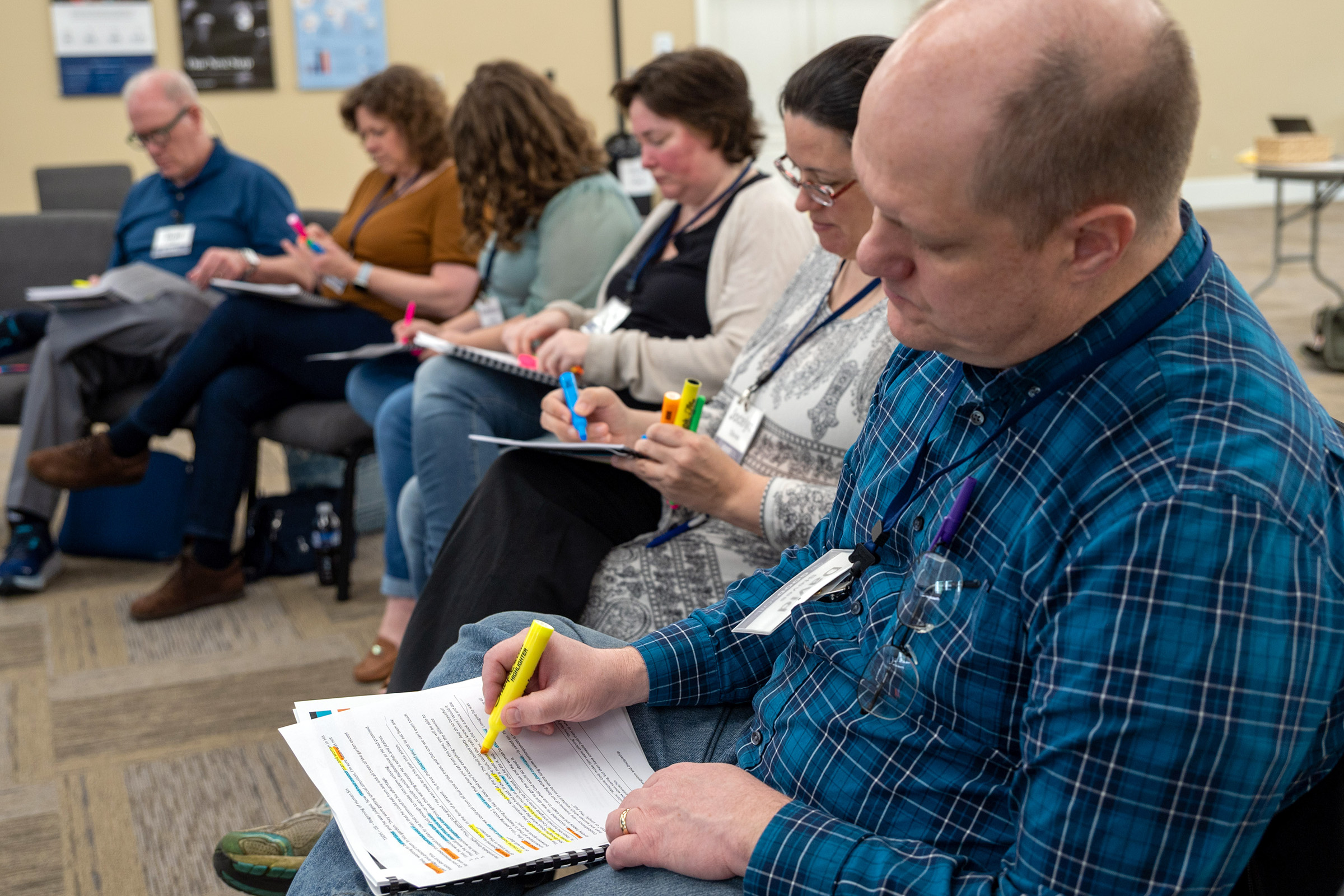
Before departure, missionaries may need additional preparation in areas unique to the missionary task. Two of our flagship trainings are Good Soil, which is our evangelism and discipleship training, and Essential Missions Components, which teaches an overview of the missionary tasks of evangelism, discipleship, and church planting. We also provide training sessions on living abroad, cultural intelligence, personal security, and language acquisition.
Finally, not all missionary training happens before you go. ABWE values lifelong learning. To support this ongoing growth and development, we’ve developed an online learning platform called ABWE Equip to provide resources for continual growth in three areas: (1) Bible and theology, (2) ministry skills, and (3) spiritual nourishment and encouragement. No amount of prefield training can prepare missionaries for every situation they will encounter. Some lessons can only be learned through experience. That is why we view missionary development as an ongoing process rather than something completed before departure.
A wise teacher of mine once compared ministry life to a pond. If water continually flows out but nothing flows in, the pond will eventually run dry. Ministry can be much the same. Even as we pour ourselves into the lives of others, we need to be continually replenished through Scripture, prayer, fellowship, and ongoing learning. Healthy ministry requires both giving and receiving. As God continues to nourish and develop us, we are better equipped to serve others.
Staying equipped allows missionaries to adapt to the changing challenges of ministry and to serve effectively on the front lines. Our desire is not simply to send missionaries but to see them thrive in the ministries to which God has called them. That means recognizing how God has already prepared each person, helping them develop the skills they still need, and encouraging them to continue growing throughout their missionary service. Every missionary needs preparation, but successful preparation looks different for each ministry.