

Imagine for a moment that your church is considering hiring a pastor who has never been to Bible college or seminary.
He has never even had informal Bible training beyond the general preaching he has heard in church services and half a dozen Sunday school classes—yet he is confident that God has called him to become a pastor. Would you entrust him with caring for your soul, feeding you the Word of God, and counseling you through the challenges of life? If some grave doctrinal error arose in the church, do you think he would be able to identify it and explain from the Word of God why it is wrong?
Assuming that your church expects some level of theological education in order to spiritually lead your congregation, you would look for a more qualified candidate. Likewise, you would never send an untrained soldier into combat, nor would you hire someone with only a basic knowledge of first aid as a medical provider for a hospital emergency room. Yet many churches send good-hearted Christians to the front lines of the mission field with only the most basic Bible training. While these workers may be eager to begin their service, sending them without adequate knowledge and skills in biblical interpretation, theology, ministry, and cultural intelligence is akin to spiritual malpractice.
Training for missions and ministry is an absolute necessity. Proper preparation is more than just common sense; it is faithfulness to the biblical mandate. Scripture itself establishes qualifications and competencies necessary for faithful ministry. Churches have an obligation to cultivate, test, and recognize those qualities before sending workers. Therefore, it is essential to discipline ourselves to prepare for the ministry to which God has called us.
To this end, let’s consider what Scripture says about training.
1. Training is essential for properly proclaiming doctrine.
First, consider Paul’s instructions to Timothy: “Do your best to present yourself to God as one approved, a worker who has no need to be ashamed, rightly handling the word of truth” (2 Timothy 2:15). The idea behind the phrase “do your best” is the concept of labor or hastening—being diligent. It means that you are aware that you are carrying out an obligation. Similarly, Paul told Timothy in his first letter that he must “watch his life and doctrine closely” (4:16). Although Timothy was not a missionary in the modern sense, Paul’s instructions also apply to missionaries. Like Timothy, they are entrusted with proclaiming and teaching the Word of God through their work of evangelism, discipleship, church planting, and leadership development.
Missionaries take the word of truth into a dark world. They must therefore be able to handle it well, like an expert swordsman well trained with the Spirit’s sword. The phrase “rightly handling the word of truth” refers to the idea of finding a straight path through the Word. We’ve all seen individuals try to prove something from the Bible by stringing together the wrong set of verses or twisting their meaning. As a seminary professor once told me, “Every heretic has his verse.” Believers, especially those in ministry, have to understand what a verse means and how it fits within the whole of Scripture to avoid falling prey to misuse and deceptions from the enemy.
One way we practice rightly dividing the truth is by correctly understanding its meaning and properly letting Scripture interpret Scripture. Consider how embarrassing it would be if a missionary encountered, for example, a Muslim imam or a Jehovah’s Witness who seemingly quoted a lot of Scripture to explain their beliefs, but the missionary neither knew the verses used nor how to rightly divide them in response to the grave errors. This is a perfect application of the type of situation Paul instructed Timothy to prepare for so that he would not be shamed. Commenting on 2 Timothy 2:15, Andreas Kostenburger has summarized this well:
Here shame is not the result of fear of being identified with Christ . . . but of lack of proper training and skill in handling God’s Word. Similarly, some today stand ready to identify with Christ and preach his Word but, due to inadequate training, fail to handle God’s Word properly and thus will be put to shame. What such people need is not more courage or commitment but proper training in interpreting and communicating the scriptural message (cf. 3:16–17). Just as a worker takes pride in a job well done, the proper teaching of God’s Word requires training and skill.1
Many missions workers today have deep passion and zeal. They have no qualms about being identified with Christ. They make great sacrifices in leaving their passport country to go to hard places around the world. Yet passion and zeal will never make up for an inability to handle the word of truth in evangelism and discipleship. Dying men and women don’t merely need our zeal; they need God’s Word.
2. Training is essential for persevering in ministry.
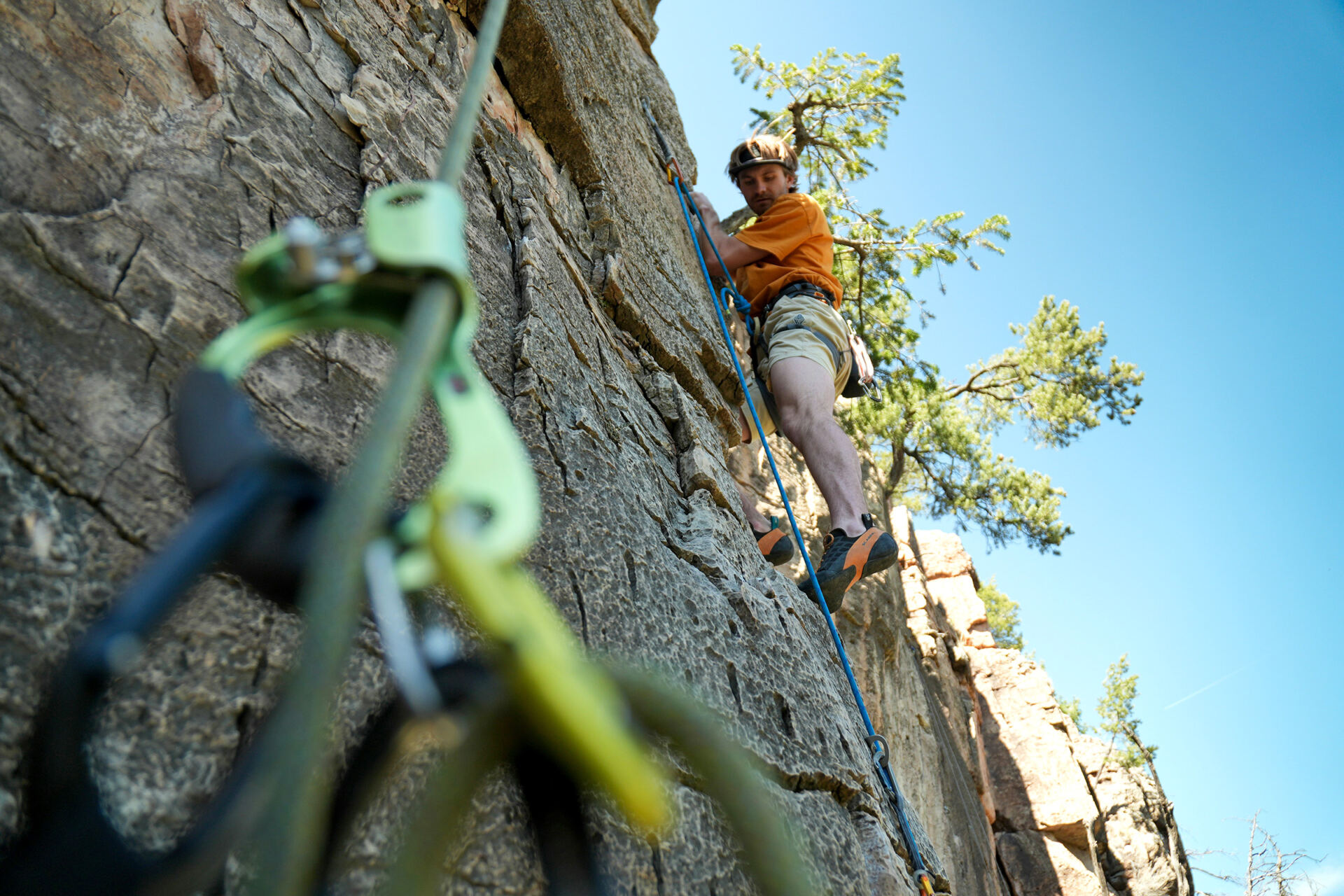
Second, Scripture portrays effective ministry not as spontaneous enthusiasm but as a life of intentional discipline, growth, and perseverance. One of the greatest challenges, as well as one of the greatest needs, is for missionaries to persevere where God has placed them. Missions work is not for the faint of heart. Diligent preparation is as essential for missionaries as it is for athletes training for a race.
While the circumstances vary, missionaries often serve in locations that bear little resemblance to their passport country. They live in a new culture, learn a new language, and have to adapt to different rhythms of daily life. Basic tasks that we take for granted and do naturally, such as shopping for groceries, become weighty and stressful when you factor in all the cross-cultural elements. It often takes years for missionaries to adapt to their new normal to the extent that they finally no longer feel like a fish out of water. Cultural and linguistic training can help the missionary learn to effectively navigate these transitions.
In addition to the practical considerations of life overseas, we must also consider the spiritual component of a missionary’s life and ministry. Spiritual warfare is a constant reality. The enemies of God and his gospel actively seek to prevent the light from piercing the darkness. In many mission fields, the spiritual soil is very hard. It can take missionaries years to patiently spread of the seed of the Word, cultivate relationships, demonstrate love and compassion, and evidence a consistent testimony before they begin to see any visible fruit.
These labors are never in vain. Yet it can be discouraging to a missionary, particularly when we in North America often tend to be impatient for results. We want to measure spiritual fruit by its outward evidence. Yet sometimes fruit begins to grow long before we ever see it. Consider the tallest building in the world, the Burj Khalifa in Dubai. It stands at the tremendous height of 2,717 feet. But did you know that the foundation extends 164 feet underground and rests on 192 massive concrete piles? The entire Burj Khalifa took six years to build, but the first 14 months—20 percent of the total construction time—were spent just building the foundation. Now imagine watching it during that time and complaining that you didn’t see the building going up.
In the same way, missionary training lays a foundation for years—even decades—of productive ministry. It equips missionaries to labor effectively and to persevere for an extended season before the firstfruits of the harvest become visible. But God is Lord of the harvest. He is faithful. We can confidently invest time and energy in building a strong foundation through training in anticipation that he might bless. God’s faithfulness is never pitted against our responsibility to be diligent in preparation. While training doesn’t guarantee perseverance, it provides missionaries with the biblical convictions, ministry skills, and disciplined habits that help guide their work and sustain them when ministry becomes difficult. Preparation is a matter of wisdom. As it is said, “To fail to plan is to plan to fail.”
While training doesn’t guarantee perseverance, it provides missionaries with the biblical convictions, ministry skills, and disciplined habits that help guide their work and sustain them when ministry becomes difficult. Preparation is a matter of wisdom.
3. Training is essential for developing godly character.
Consider the example of Paul. Even during active ministry, he compared himself to an athlete disciplining his body and exercising self-control in order that he might run and not be disqualified:
Do you not know that in a race all the runners run, but only one receives the prize? So run that you may obtain it. Every athlete exercises self-control in all things. They do it to receive a perishable wreath, but we an imperishable. So I do not run aimlessly; I do not box as one beating the air. But I discipline my body and keep it under control, lest after preaching to others I myself should be disqualified. (1 Corinthians 9:24-27)
Speaking to Timothy, Paul exhorted the younger pastor to watch both his life and doctrine. He wanted Timothy to not only excel in teaching solid doctrine but to set an example “in speech, in conduct, in love, in faith, in purity” (1 Timothy 4:12). Then, he instructed Timothy to continue growing in these areas:
Practice these things, immerse yourself in them, so that all may see your progress. Keep a close watch on yourself and on the teaching. Persist in this, for by so doing you will save both yourself and your hearers. (1 Timothy 4:15-16)
While missionary training includes academic Bible knowledge, it extends much further. Long before missionaries arrive on the field, they must have evidenced godly character before their local church and excelled in gracious speech, virtuous conduct, personal holiness and purity, and the fruit of the Spirit. Developing these traits begins through discipleship in the local church but also continues through training during the pre-field process. Missionaries must not only evangelize and disciple; they must live consistent, godly lives to demonstrate the faith they preach. This requires both rigorous preparation and lifelong discipline, just as athletes train before the Olympics and maintain their training even after the event.
In the biblical example, Paul and Barnabas had an established track record of character and ministry in the church of Antioch even before they were called into missions (Acts 13:1-3). Because their gifts, skills, and character were clearly evident, the church could send them confidently.
It is easy to want to rush the training process to get to the “real” work of missions, but training itself is part of the ministry. Consider the example of two ministry giants who, looking back, wished they had spent more time preparing. In a 1977 Christianity Today interview, Billy Graham said, “One of my great regrets is that I have not studied enough. I wish I had studied more and preached less. People have pressured me into speaking to groups when I should have been studying and preparing.” He then attributed to Donald Grey Barnhouse, the famous preacher from Tenth Presbyterian Church, the axiom “If I knew the Lord was coming in three years, I would spend two of them studying and one preaching.”
Missions work is a marathon, not a sprint. The attributes that may get a missionary to the field the fastest may not be the attributes that allow him or her to correctly teach the Word of God or to persevere when the calling gets hard—and it will get hard. Just as in the fable of the tortoise and the hare, getting off the starting blocks the fastest is not the same as getting to the finish line of the missionary task. To this end, training is essential not only to equip missionaries with needed skills and the ability to handle God’s Word but also to shape their hearts and develop a spirit of perseverance.
The Lord calls missionaries to be faithful workers in fields that are ripe for harvest. To fulfill that call, every worker should faithfully prepare to labor under the heat of the sun to get to the season of harvest.

[1] Köstenberger, A. J. (2021). 1-2 Timothy & Titus (T. D. Alexander, T. R. Schreiner, & A. J. Köstenberger, Eds.; p. 243). Lexham Press.